
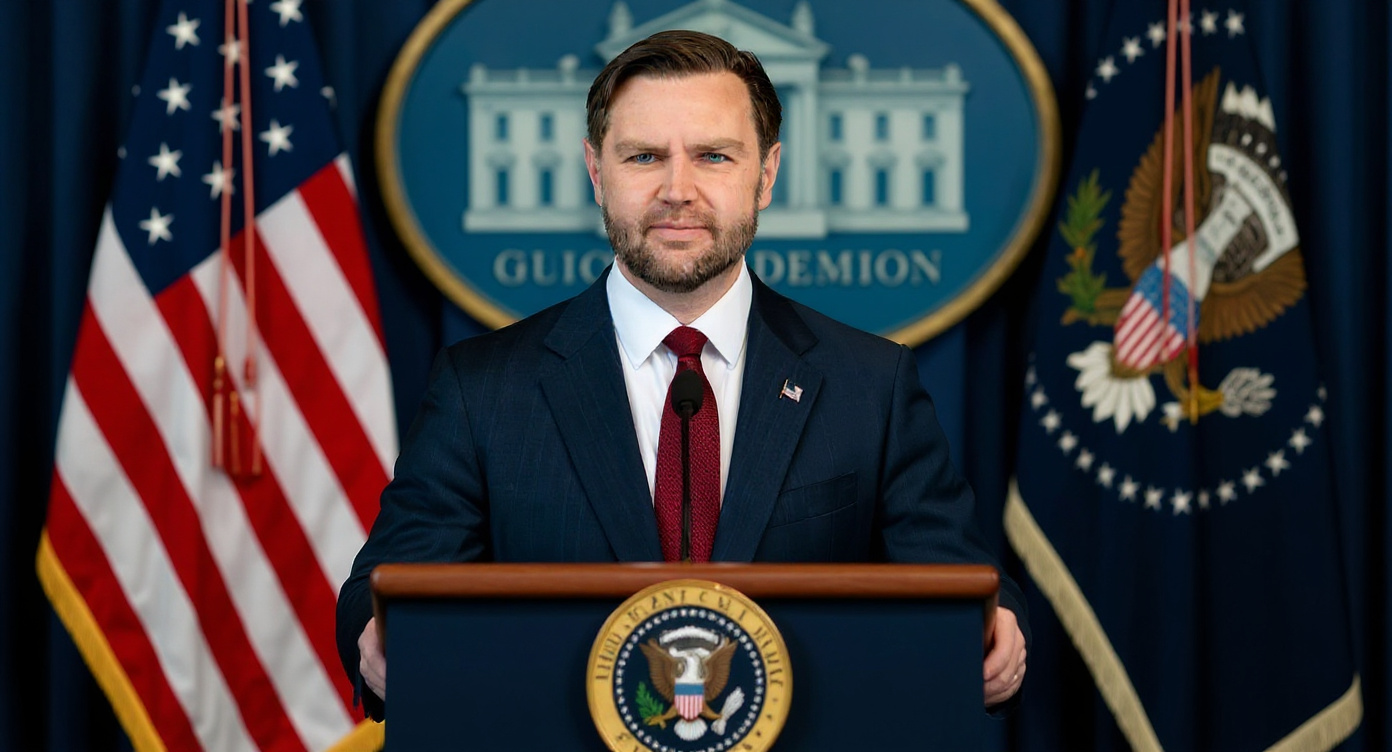
Two hundred and thirty billion dollars. That's how much fraud the Trump administration's Task Force to Eliminate Fraud has identified across the federal government, Vice President JD Vance announced Friday at Camp David.
Of that, $56 billion in fraudulent payments has already been prevented from going out the door.
Vance, who chairs the task force, laid out the numbers alongside Health and Human Services Secretary Robert F. Kennedy Jr., Acting Attorney General Todd Blanche, Small Business Administration Administrator Kelly Loeffler, and Veterans Affairs Secretary Douglas Collins. The scope of the fraud spans multiple agencies and multiple states, with President Trump singling out Minnesota, California, and Maine as having the highest levels of corruption.
"This really has required a whole administration approach to try to tackle fraud," Vance told the assembled cabinet, as reported by 100 Percent Fed Up. The task force isn't one department's pet project. It's a coordinated sweep across federal programs that have been hemorrhaging taxpayer money for years — in some cases, decades.
President Trump, for his part, didn't mince words. "The level of corruption is incredible," he said. Which is one of those sentences that sounds like standard political rhetoric until you remember the guy saying it is sitting on $230 billion worth of evidence.
Vance followed up with a pledge that the work is far from over. "We're going to keep on working at it because we believe the American people deserve to have their money spent as you, the Congress, have directed," he said. That last part — "as you, the Congress, have directed" — is doing a lot of heavy lifting. Congress appropriates money for veterans' care, small business loans, public health. Not for whoever figured out how to game the billing system.
The DOGE initiative got the headlines earlier this year for slashing bureaucratic bloat and identifying wasteful spending. But DOGE was always the audit. The Task Force to Eliminate Fraud is the enforcement arm — the part where you actually claw back the money and shut down the pipelines that were siphoning it.
The usual defense from government bloat apologists is that fraud is a rounding error in a $6 trillion federal budget. Funny math. Two hundred and thirty billion dollars is larger than the GDP of most countries. It's more than the entire annual budget of the Department of Veterans Affairs. Calling it a rounding error is like calling a five-alarm fire a candle.
What makes the Camp David presentation notable isn't just the dollar figure. It's the format. A televised cabinet meeting where every agency head sits at the table and accounts for the fraud discovered in their department. That's not a press conference — that's accountability theater in the best sense of the word. The American public gets to see which agencies were bleeding money and which officials are now responsible for stopping it.