
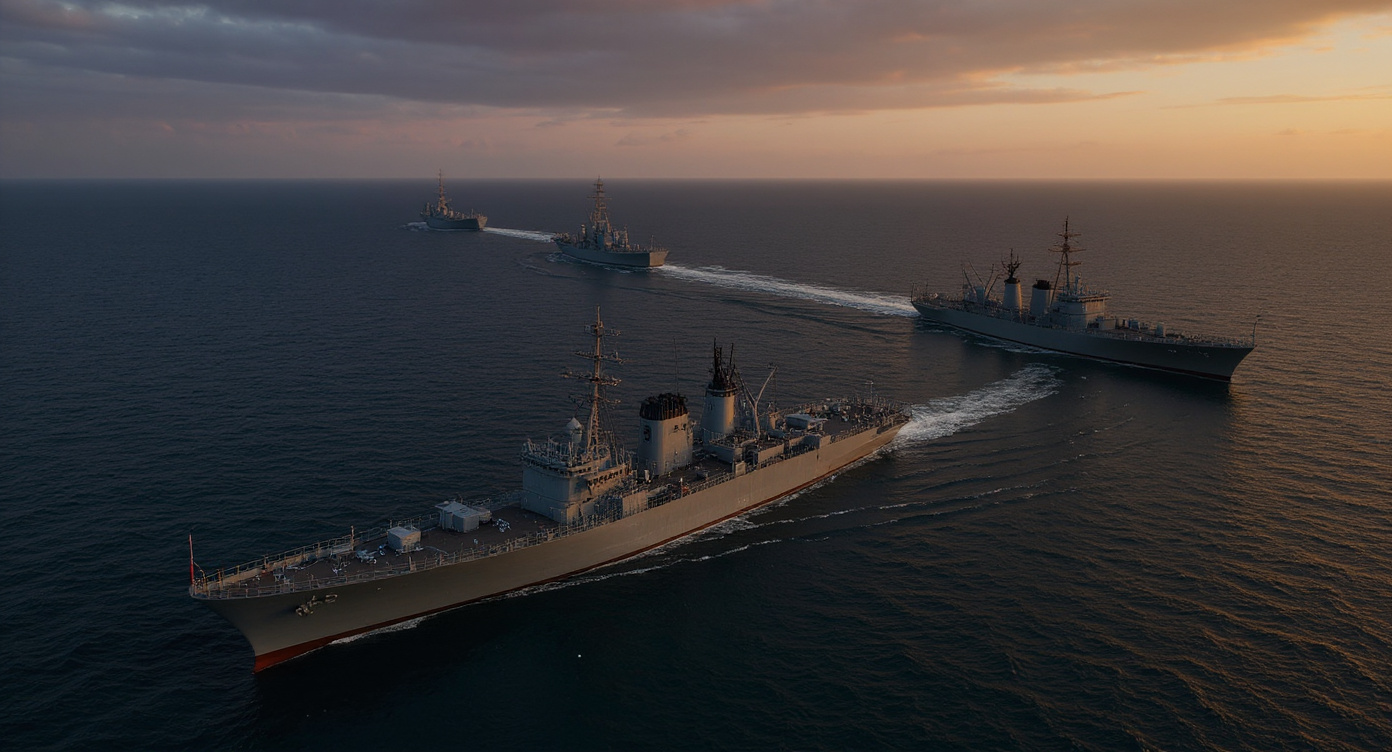
President Trump announced that Iran has agreed to curb its nuclear ambitions, and Iranian officials are publicly admitting that the U.S. naval blockade is working so well their refineries are at risk. Maximum pressure, it turns out, is not just a slogan. It’s a strategy. And it’s working while the “experts” are still updating their World War III prediction models.
Remember when every cable news panel in America assured us that Trump’s approach to Iran would lead to global thermonuclear war? How’s that take aging?
“Iran cannot have a nuclear weapon, and they won’t. And they’ve agreed to that,” Trump said from the Oval Office on May 6th. No ambiguity. No diplomatic hedging. No eight-paragraph State Department press release that says nothing. Just the bottom line, as reported by Newsmax.
The timeline here is important. On February 28, the U.S. and Israel launched airstrikes against Iran. The “foreign policy establishment” — those same geniuses who gave us two decades in Afghanistan — predicted catastrophe. Instead, after more than two months of sustained pressure, Iran floated a 14-point plan last week and is now reviewing a one-page memorandum framework from the United States covering commercial shipping restoration, sanctions relief, and nuclear restrictions.
A one-page memo. Not a 2,000-page treaty that nobody reads. One page. That’s how you negotiate when you’re actually winning.
“We’ve had very good talks over the last 24 hours,” Trump told reporters. He also dropped this gem: “Now, it’s only a question of… if we left right now, Iran, it would take them 20 years to rebuild.” Twenty years. That’s how much damage maximum pressure has done to a regime that has terrorized the Middle East for four decades.
And here’s the number that should keep every mullah in Tehran awake at night: U.S. officials say over 900 pounds of highly enriched uranium remain unaccounted for, and Trump made clear we’re going to get it. “We’re going to get it,” he said. Not “we hope to discuss the possibility of exploring a framework for the potential retrieval of” — just “we’re going to get it.”
The Strait of Hormuz, which carries roughly one-fifth of the world’s oil and natural gas shipments, has been the linchpin of Iran’s leverage for decades. You threaten to close the strait, the world panics, and Iran gets concessions. That playbook is dead. The U.S. blockade flipped the script — now Iran is the one panicking because their own oil can’t move.
An Iranian oil official admitted publicly that “the fate of our refineries is now at risk.” Read that again. Their own people are saying the quiet part out loud. When your government officials start publicly conceding that the enemy’s strategy is working, you’re not negotiating from strength. You’re negotiating from survival.
The White House is currently awaiting Iran’s formal response to the framework memo. But let’s be honest — when the other side’s officials are telling their own press that their refineries are in jeopardy, the negotiation is already over. The rest is paperwork.
Every “expert” who said this would be Iraq 2.0, every columnist who wrote breathless op-eds about escalation spirals, every retired general on CNN who warned about “unintended consequences” — they owe the American people an apology. They won’t give one, of course. They never do.
Trump didn’t start World War III. He ended Iran’s nuclear ambitions with a blockade, a one-page memo, and the kind of leverage you get when the other side knows you’re not bluffing.