
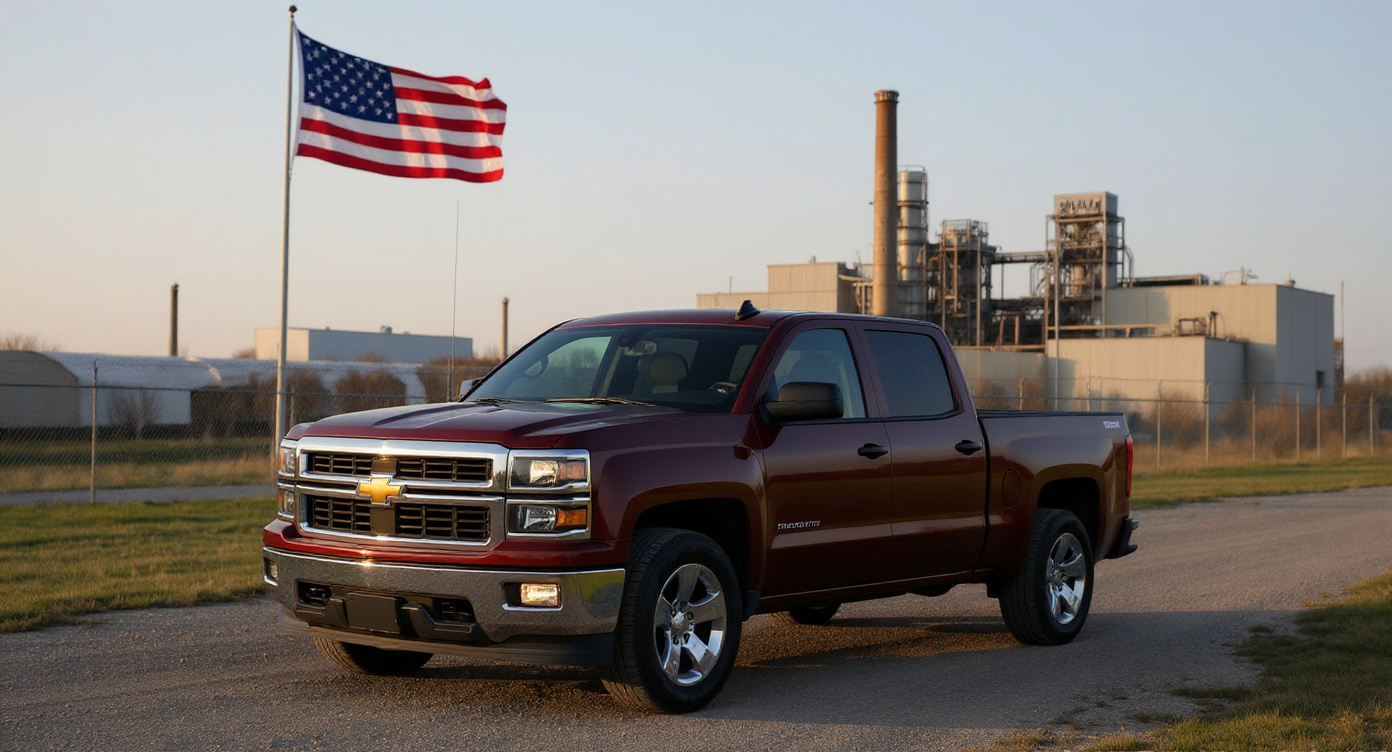
The average new car in America costs roughly $50,000. Under the Biden administration's EPA rules, 67% of all new light-duty and medium-duty vehicles sold by 2032 were supposed to be electric — cars that cost more, go fewer miles, and die in cold weather. On Saturday, President Trump signed new fuel economy standards that formally terminate that mandate.
The government will no longer decide what kind of car you drive.
Trump announced the move on Truth Social, writing, "BIG DAY FOR AMERICAN AUTO WORKERS AND CAR BUYERS! I have just approved new Fuel Economy Standards that TERMINATE Sleepy Joe Biden and Pete Boot-EDGE-EDGE's ridiculous EV Mandate." The new standards lower fuel economy targets from Biden's approximately 50 miles per gallon by 2031 to roughly 34-35 mpg and strip out the extra credit calculations that rewarded automakers for selling EVs instead of vehicles people actually wanted.
Secretary of Transportation Sean Duffy and Secretary of Commerce Howard Lutnick both backed the rollout. Ford CEO Jim Farley called it a "victory for affordability and common sense" — which is corporate-speak for "thank God, we can stop building cars nobody's buying."
Trump framed the standards as a direct cost-of-living win, claiming they would "take the waste out of building cars in America" and result in "LOWER PRICES, saving families thousands on a new, beautiful, and safe car." Early estimates suggest at least $1,000 in savings per consumer on new vehicle purchases.
The investment numbers tell the rest of the story. Trump noted that over $100 billion is being invested in American auto manufacturing under his administration. Stellantis alone committed $13 billion to Midwest factories across Indiana, Ohio, and Michigan. General Motors and Ford are expanding domestic production lines. These are combustion-engine jobs in combustion-engine states — not subsidized battery plants that depend on Chinese mineral supply chains to exist.
This wasn't the first swing. Trump signed three congressional resolutions in June eliminating California's special authority to set its own diesel engine rules and EV sales mandates — rules that Sacramento had been using to drag the rest of the country into its green experiment whether they voted for it or not. The One Big Beautiful Bill Act ended Biden's electric vehicle tax credits entirely. The EV mandate didn't die in one blow. It was dismantled piece by piece over the course of months.
The environmental lobby's objection is predictable: fuel consumption will increase, emissions targets will slip, the planet will boil. The same groups made the same predictions when Trump rolled back Obama-era standards in his first term. American emissions continued to decline anyway, driven by natural gas displacement and market innovation — not government coercion. The theory that Washington bureaucrats must force the auto industry to build efficient cars assumes the auto industry has no financial incentive to do so on its own. It does. It always has.
Biden's EPA rule was never about the environment. It was about control — picking winners in an industry the government doesn't operate, doesn't fund, and doesn't understand. The 67% EV target by 2032 was a number chosen to sound ambitious in a press release, not because anyone ran the grid-capacity math or asked a family in rural Ohio how they'd charge an electric truck.
Stellanatis is investing $13 billion in the Midwest. Ford's CEO is calling the rollback common sense. The average new car costs $50,000 and the mandate that was about to make it worse is dead.