
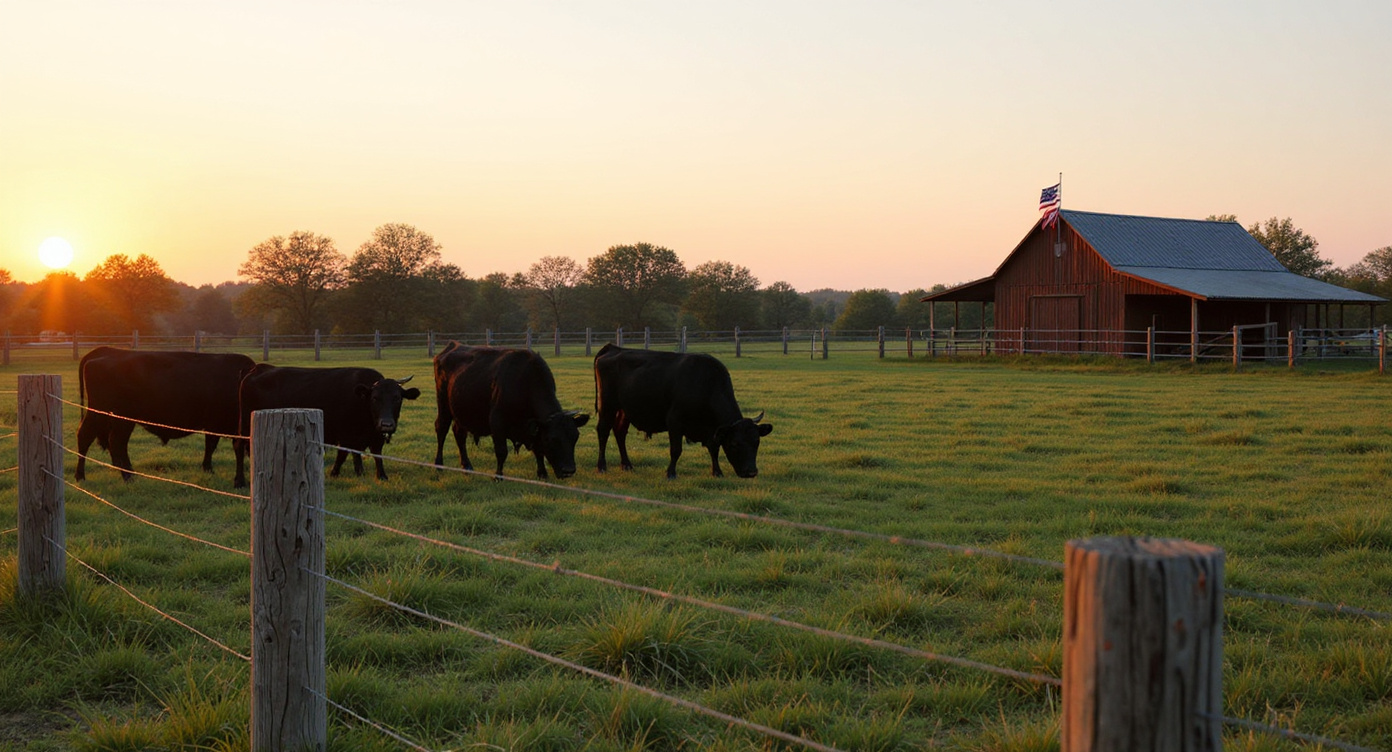
Derek Lange runs Citrus Cattle Company in California's Central Valley. Every time he has a steer ready for market, he loads it on a trailer and hauls it two and a half hours to the nearest USDA-inspected processing facility — because there's no closer option. The cost? Roughly $1.20 to $1.60 per pound, about two and a half times what a local butcher would charge.
Four companies control 85% of fed-cattle slaughter in this country. Tyson. Cargill. JBS. National Beef. And until this week, that's exactly how Washington liked it.
The Trump administration just moved to break that grip. The new policy cuts the red tape and cost barriers that have made it nearly impossible for independent ranchers to set up their own USDA-inspected processing facilities — the single biggest chokepoint keeping small operators locked out of the market and locked into the Big Four's pricing.
"Trump wants to remove some of the red tape and costs associated with setting up USDA inspected facilities," Lange said. "The way we remove power from the 'Big 4' is to give US ranchers a way to be competitive."
Agriculture Secretary Brooke Rollins confirmed the administration is moving fast. "We are on it Mr. President," Rollins said. "The world is hungry for American beef."
This comes on the heels of President Trump's August 21 announcement authorizing the import of 300,000 metric tons of lean beef trimmings on a tariff-free basis for 90 days — a move that rattled some in the cattle industry. The U.S. Cattlemen's Association pushed back. Critics said flooding the market with foreign beef at a 25% discount would undercut American ranchers.
Lange wasn't worried. "I was not too concerned when I heard Donald Trump announce the import of 300,000 tons of beef," he said. "Brazil is already a major importer of beef to the US and so it's business as usual."
The import play was about consumer prices. This move — the processing deregulation — is about producer freedom. Two different levers pulling toward the same thing: cheaper beef for families, fairer economics for ranchers, and less power for four corporations that have been running the cattle industry like a private toll road since the 1950s.
"Consumers want to buy beef from ranchers and be a part of their story," Lange said. And he's right. The direct-to-consumer beef market has exploded over the last five years. The problem was never demand. It was that the regulatory architecture made it almost impossible for small ranchers to legally meet that demand without routing everything through the same four processors who set the price.
"One of the biggest challenges I had when trying to develop our direct-to-consumer beef business" was the processing bottleneck, Lange explained. When the nearest USDA facility is a two-and-a-half-hour drive and charges double, the math doesn't work — and the Big Four know it.
The same crowd that spent 2020 telling us to consider cricket protein and lab-grown "meat" never once mentioned that four companies had a regulatory moat around the entire beef supply chain. Strange how the solution to every food problem was always "eat less meat" and never "let ranchers process their own cattle."
American cattle herds are at levels not seen since the 1950s. Ranchers have been squeezed for decades — not by the market, but by a regulatory structure that made the Big Four the only game in town. Trump just kicked the gate open.
The steak on your grill might not get cheaper tomorrow. But the rancher who raised the cow just got a shot at keeping more of what it's worth.