
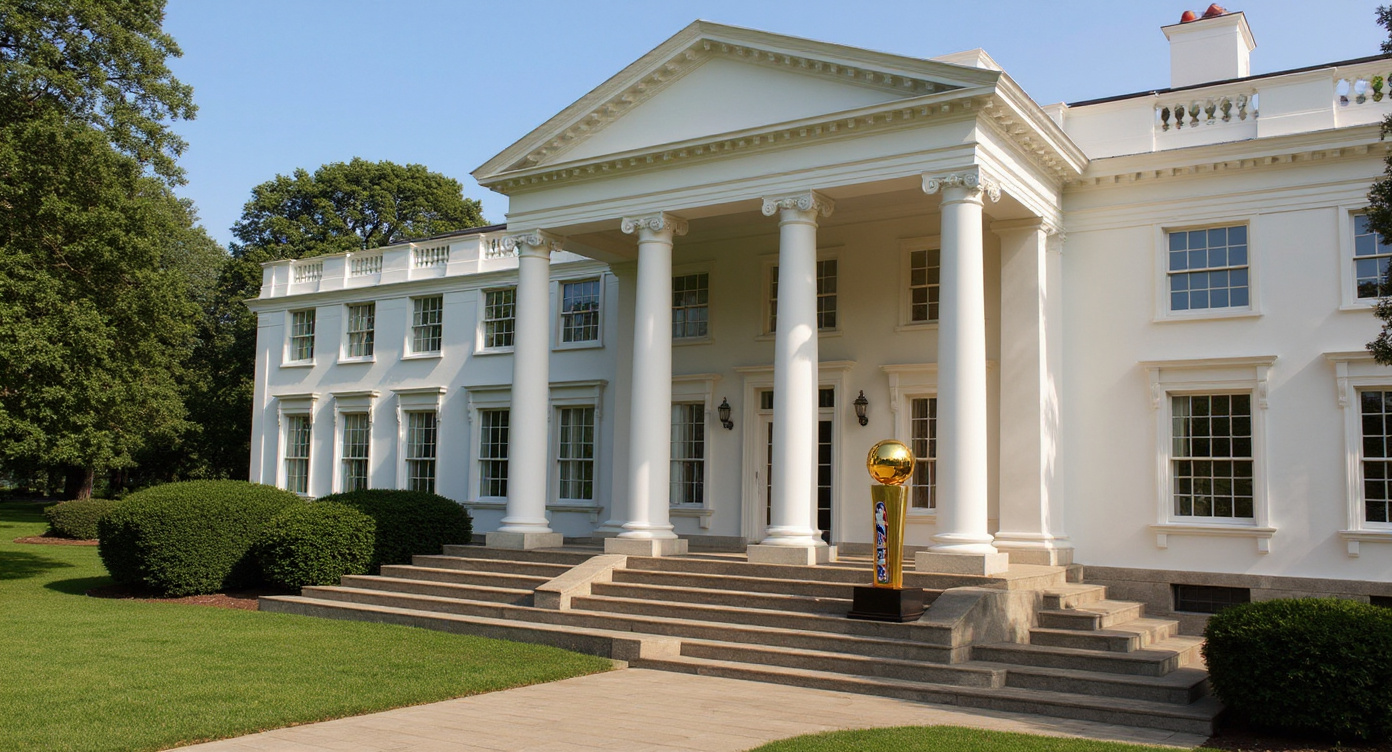
On June 13, 2026, the New York Knicks beat the San Antonio Spurs 4-1 at Frost Bank Center to win their first NBA championship since 1973. Fifty-three years of heartbreak, finally over. Jalen Brunson took home the Bill Russell NBA Finals MVP award.
And then came the outrage — not about the basketball, but about what the team did next.
Knicks owner James Dolan accepted the traditional White House invitation from President Trump, and a segment of the internet promptly lost its collective mind. The idea that professional athletes might visit the sitting president to celebrate a once-in-a-generation achievement was, apparently, a bridge too far for people who spent three NBA administrations cheering teams through the same door.
The irony is industrial-grade. Eight NBA teams visited the White House under President Obama. The Milwaukee Bucks went in 2021 under Biden. The Golden State Warriors went in 2023. The Boston Celtics made the trip in 2024. Nobody demanded those teams explain their political affiliations before accepting the invitation. Nobody accused them of endorsing every policy position of the administration that hosted them.
But when the visit involves President Trump — a president who received 77 million votes — the rules change. Suddenly a championship celebration becomes a loyalty oath, and showing up to shake hands in the East Room is a moral failing.
As Paul Belmonte, a Law and Global Affairs student at the University at Buffalo, wrote for AMAC Newsline: "The Knicks earned a championship. They earned the right to celebrate it. They shouldn't have to pass a political purity test to do so."
That's the line that captures the whole thing. A political purity test. For basketball players. Who won a basketball championship.
The objection isn't really about the Knicks. It's about maintaining the fiction that half the country's elected leader is so uniquely illegitimate that normal civic traditions must be suspended whenever he's involved. The White House visit has been a staple of American sports for decades. Teams go. They take photos. They present a jersey. The president makes a joke about wanting to suit up. Everyone moves on.
Unless moving on means conceding that the president is, in fact, the president. That's the part that sticks.
The critics could argue that athletes have the right to decline — and they do. Individual players have skipped White House visits under multiple administrations, and that's their prerogative. But the anger here isn't directed at players who might choose not to go. It's directed at the organization for accepting at all, as if the proper response to a presidential invitation is to check Twitter first.
The Knicks waited 53 years for this. Their fans waited 53 years for this. The franchise finally broke through, and the conversation isn't about the comeback, or Brunson's performance, or what this means for New York basketball.
It's about whether they're allowed to be happy in the wrong building.