
Francesca Hong was polling ahead by 20 to 30 points in Wisconsin. She lost by 3,000 votes.
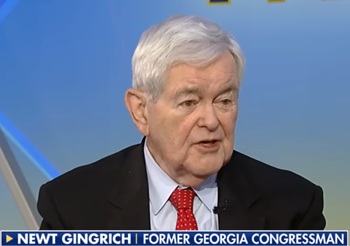
That's the number Newt Gingrich dropped on "The Hang Out with Sean Hannity" this week to explain why he thinks Republicans are heading for "one of the most shocking off-year elections in American history."
The former Speaker of the House — the man who engineered the 1994 Republican revolution that flipped the House for the first time in 40 years — sat down with Sean Hannity and laid out a case that the 2026 midterms aren't just favorable for the GOP. They're a potential blowout. And he had the receipts to back it up.
Gingrich walked through a pattern of Democratic candidates polling far ahead of their actual results. El-Sayed, he noted, polled up by 20 and won by just 1. Hong's Wisconsin collapse was worse — a 20-to-30-point polling lead evaporated into a 3,000-vote loss. The surveys say one thing. The ballot boxes keep saying another.
"I'm not a big fan of polling, especially in this election cycle," Gingrich told Hannity.
He doesn't need to be. The fundamentals are doing the talking. Democratic infighting has gone from background noise to the main event. President Trump's policy wins keep stacking. And the GOP's voter base keeps outperforming every model designed to measure it.
Gingrich said he'd recently discussed six competitive states with Megyn Kelly, and the picture was consistent across all of them — Republican energy is outpacing what the data captures. The polls aren't wrong because they're poorly constructed. They're wrong because they can't measure what's actually moving.
"If every Republican candidate picks up these themes, they penetrate," Gingrich said.
That's not a cable news pep talk. That's the operational insight of the man who spent decades studying how wave elections form. The 1994 Contract with America didn't win because Republicans were suddenly popular. It won because they identified a unified message and hammered it into every district in the country. Gingrich sees the same structural advantage forming now — except the opposition is weaker, more fractured, and running against a president whose policies are producing visible results.
He went further than most pundits bother going. Gingrich drew a historical parallel to Thomas Jefferson and the collapse of the Federalist Party over a 12-year period, arguing that the Democratic Party is following a similar trajectory — internal fracture, public rejection, and an inability to adapt to what voters actually want. That's not a comparison you make casually. Jefferson didn't just beat the Federalists. He made them irrelevant.
"I think the odds are much better than even that we will win one of the most shocking off-year elections," Gingrich said.
The Democrats' problem isn't just that they're losing races they expected to win. It's that they're losing them by margins their own data never predicted. When your internal polling says you're cruising in Wisconsin by 25 points and you lose by 3,000 votes, you don't have a messaging problem. You have a reality problem. Your voters aren't where you think they are. Your coalition isn't as solid as your consultants promised. And no amount of ad spending closes a gap you can't even see.
Gingrich built the playbook for turning structural advantage into a wave. He watched the conditions form in 1994, identified them before anyone else did, and executed. He's looking at 2026 and seeing the same pieces on the board — a tired opposition, an energized base, a popular president's agenda driving turnout — except this time, the other side is fighting itself harder than it's fighting Republicans.
The man who knows what a wave looks like before it crests says this one is forming. Hong polled ahead by 20. Lost by 3,000. That gap isn't closing.