
Rochelle Olson, a Star Tribune columnist, opened her latest piece with a warning: "What I'm about to write will generate hate mail." She was right about that part. What followed was a love letter to outgoing Minnesota Governor Tim Walz so detached from reality it could qualify as creative fiction.
Her thesis: "Whatever one thinks about Walz's policies, he led thoughtfully and compassionately."
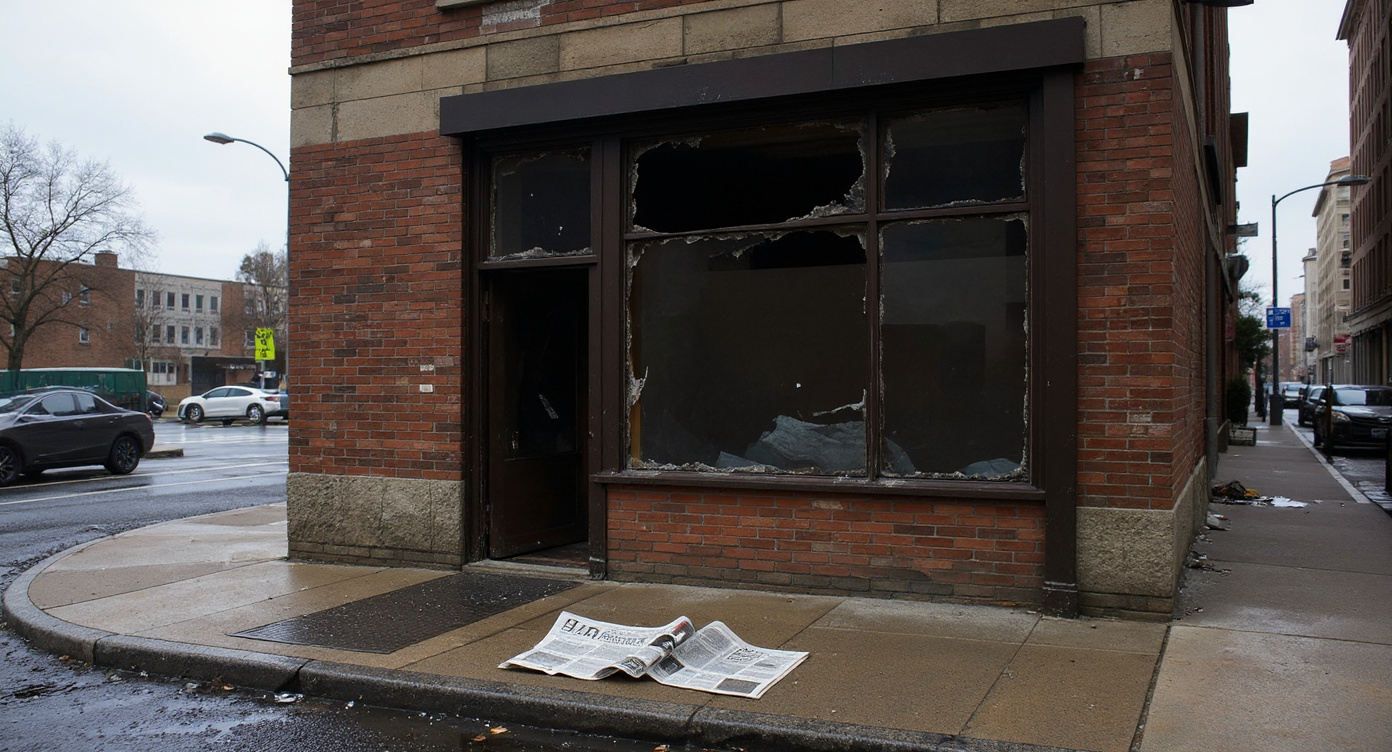
That's an interesting word, "compassionately." The business owners in Minneapolis who watched their livelihoods burn during the 2020 riots while Walz hesitated to deploy the National Guard might define the word differently. David Strom, a columnist at Hot Air and a veteran of roughly 20 years in Minnesota politics, wasn't buying what Olson was selling. He laid out the case that liberal media are now engaged in an active rewrite of the Walz era — polishing the failures into features before the governor even clears out his desk.
Olson's verdict on the Walz years: "Walz has one hell of a legacy." On that much, she and Strom agree. They just disagree on what that legacy actually contains.
Strom's inventory includes the massive fraud that exploded across Minnesota's social services programs under Walz's watch. The state's universal free school lunch program — not means-tested, available to every student regardless of family income — became a symbol of Walz-era governance. Spend first, ask questions never. Diversity quota contracting requirements created new entry points for fraud that went unaddressed while the administration focused on expanding programs rather than policing the ones already hemorrhaging money.
Then there's the education system. Minnesota once ranked among the top states for student outcomes. Under Walz, the focus shifted from academic performance to equity frameworks and administrative expansion. The results tracked accordingly. But in the Star Tribune's retelling, none of that makes the highlight reel.
The rehabilitation effort follows a familiar pattern. A Democratic governor presides over visible, measurable failures — riots that destroyed neighborhoods, fraud that drained public resources, educational decline that parents can see in their own kids' report cards. Then, as the term winds down, the friendly press steps in to recast the wreckage as compassion. The fraud wasn't negligence; it was generosity. The riots weren't a failure of leadership; they were a difficult moment navigated with empathy.
Strom pointed out what this really is: the liberal media's default setting. Republicans are mean, Democrats are good, and the actual outcomes don't factor into the scoring. Walz let Minneapolis burn, expanded programs riddled with fraud, and presided over declining schools. The Star Tribune looked at that record and saw a man who "led thoughtfully."
Olson knew she'd get hate mail for writing her column. She framed that as proof of her courage. It's actually proof that enough Minnesotans lived through the Walz years to know what "compassionate" governance cost them.
The buildings on Lake Street didn't burn down compassionately. They just burned down.