
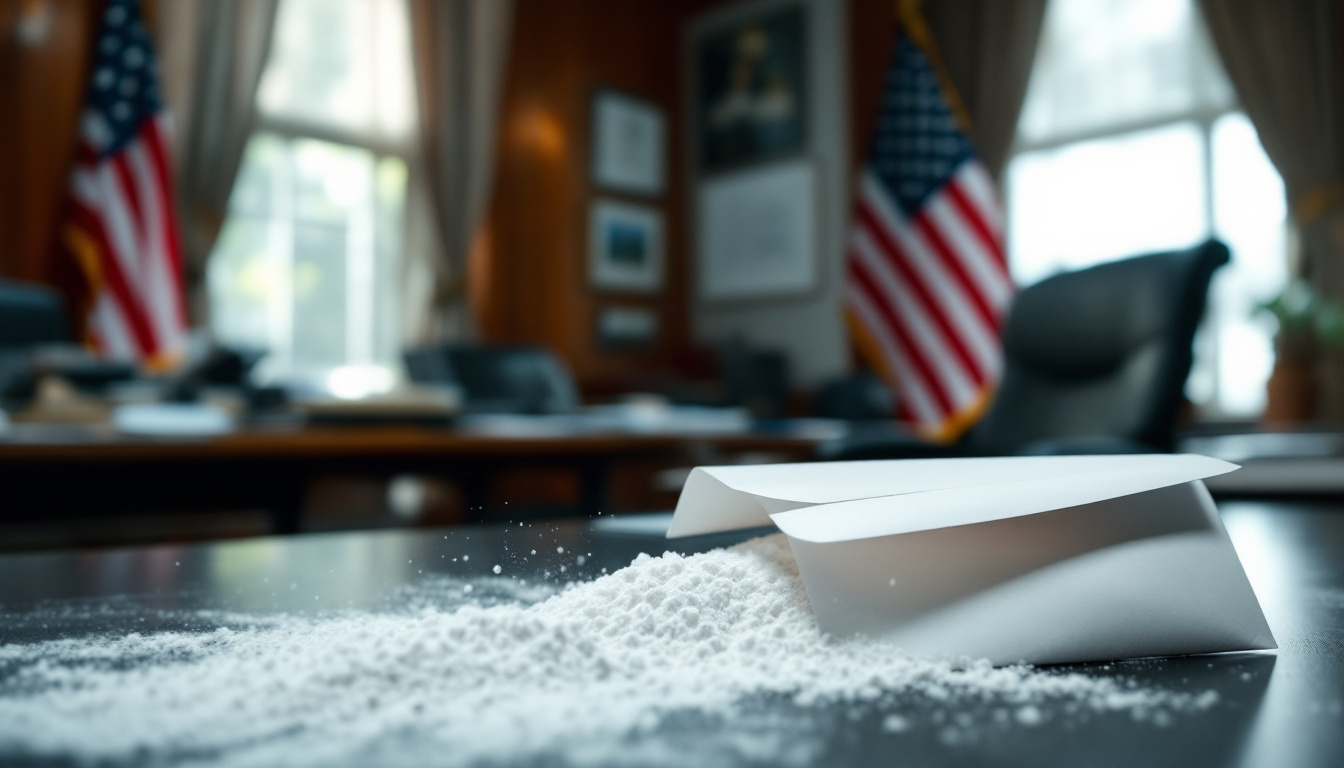
The envelopes were plain white, stamped "Thinking of You," and they contained powder. More than three dozen members of Congress — Republicans and Democrats — have now received them at district offices across the country, all traced to the same North Texas mail processing facility, all arriving as the November 3 midterm elections close in.
The FBI has no suspect.
House Sergeant at Arms William McFarland sent a memo to congressional staff warning that "none of the letters received by Congressional offices have been determined to contain hazardous substances" but cautioning that more offices may receive similar letters "in the coming days." That's the official reassurance: the powder probably won't kill you, and more is coming.
More than 100 letters containing suspected white powder are now circulating in the U.S. mail system, according to Newsmax and multiple federal sources. At least 15 states have reported election offices receiving the same suspicious envelopes. The targets aren't random — secretary of state offices, congressional district offices, and at least two U.S. senators had letters intercepted before delivery. The FBI, U.S. Capitol Police, and U.S. Postal Inspection Service are all investigating. The envelopes share common features: same type, same North Texas origin point, same "Thinking of You" marking.
Some carried a more specific signature. Roll Call reported that certain envelopes bore the marking "DSA" — the abbreviation for Democratic Socialists of America. The organization issued a statement to the New York Times denying involvement: "D.S.A. did not send these letters." Whether someone is framing them or borrowing their brand, the letters are landing in offices on both sides of the aisle.
Rep. Hillary Scholten, a Michigan Democrat, said the letter she received "made a direct and specific reference to an impending 'civil war' beginning after election." In New York, at least 10 people were exposed to the powder across the offices of Rep. Hakeem Jeffries, Rep. Ritchie Torres, and Rep. Tom Suozzi. Five staff members were evacuated from Rep. Seth Moulton's Salem, Massachusetts office. Rep. Jimmy Panetta said his Santa Cruz staffer "immediately put the envelope in the garbage can, cleared staff, called 911."
Republicans got hit too. Sen. Mike Rounds' Sioux Falls office was evacuated. "This situation is deeply concerning and follows intimidating tactics impacting our team," Rounds said. Sen. Ted Cruz and Sen. Pete Ricketts both reported receiving suspicious letters. Sen. Susan Collins' chief of staff responded: "Despite escalating political rhetoric and harassment, we will continue work for Maine."
This isn't new. In 2024, election officials in 17 states received similar suspicious mailings ahead of the presidential election. One batch in Utah was signed by a group calling itself the "United States Traitor Elimination Army." Nobody was ever publicly identified as responsible. Now the same playbook is running again — bigger, broader, hitting Congress directly this time — and the investigation is arriving at the same destination: nowhere, slowly.
Rep. Subramanyam, whose Leesburg, Virginia office was among the first evacuated, said "acts of political intimidation have no place in our country." That's the standard line. Everyone agrees intimidation is bad. The part nobody wants to say out loud is that someone has figured out you can mail white powder to a hundred government offices across fifteen states, shut down operations, trigger hazmat responses, terrify staff, reference civil war — and the federal government's three-agency investigation still can't tell you who bought the envelopes.
The 25th anniversary of the 2001 anthrax attacks passed last month. Those letters killed five people and hospitalized seventeen. It took the FBI seven years to close that case. The powder in these envelopes has tested non-hazardous so far. The letters are designed to frighten, not to kill. But the operational reality is the same: someone with stamps and a mailing list can paralyze the offices of the people who write the laws, two weeks before an election, and the best the House Sergeant at Arms can offer is a memo telling staff to expect more.
Senate Minority Leader Chuck Schumer and Sen. Alex Padilla both had letters intercepted. Sen. Chris Murphy's staff was alerted by federal authorities before anything arrived. The Postal Service blocked delivery to Ohio Secretary of State Frank LaRose's office. In Louisiana, an employee in the Secretary of State's Election Division opened a package and was taken to the emergency room as a precaution — uninjured, but the Baton Rouge building was evacuated.