
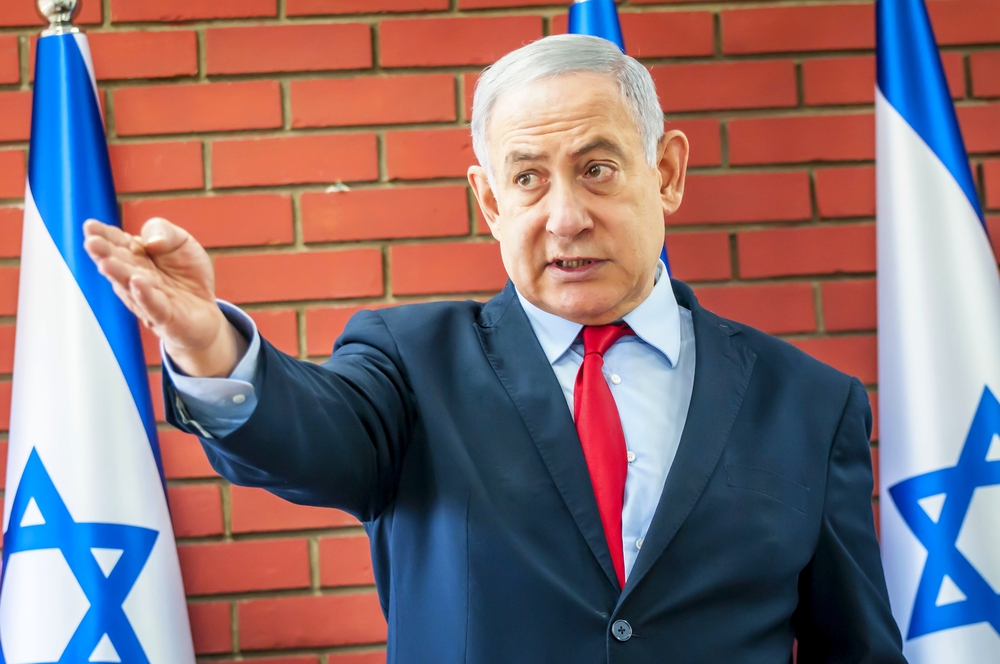
Israeli Prime Minister Benjamin Netanyahu stood at a cabinet meeting on Sunday and said six words that just blew up a week and a half of White House victory laps: "Israel rejects the 15-point document."
The document in question is President Trump's Board of Peace roadmap for Gaza — the one Trump announced on July 30 as a "historic agreement." Historic lasted about ten days.
To be clear about what happened here: the Board of Peace spent months negotiating a 15-point plan in Cairo that called for a phased Israeli withdrawal alongside Hamas disarmament. The idea was that both sides would move in parallel — Israel pulls troops back past the Yellow Line while Hamas surrenders weapons under international supervision. It was the kind of carefully sequenced diplomatic architecture that looks great on paper and falls apart the second it meets actual Middle Eastern politics.
Netanyahu's objection isn't complicated. He wants Hamas to disarm first, completely, before a single IDF soldier moves an inch. "The IDF will not carry out any withdrawal until Hamas is genuinely disarmed," he told his ministers. And in case anyone thought he was leaving himself wiggle room, he clarified: "When I say Hamas is disarmed, that means the heavy weapons, the less heavy weapons, all the weapons."
His far-right coalition partners jumped in behind him. Finance Minister Bezalel Smotrich declared that "the IDF cannot retreat one millimeter in the Gaza Strip." National Security Minister Itamar Ben-Gvir dismissed the entire draft as "not acceptable." These are the guys Netanyahu needs to keep his government together through an October election where his coalition is already polling short of the 61-seat majority needed to form a government.
So Netanyahu is caught in the oldest political trap in the book: the guy writing his checks wants one thing, and the guys keeping his lights on want another. Trump wants a deal. Smotrich and Ben-Gvir want permanent occupation. Netanyahu needs both of them more than either of them needs him.
Hamas, for its part, is doing what Hamas always does — sitting back and waiting for the other side to fight with itself. Senior Hamas official Basem Naim told Reuters the group "expects mediators and the United States to press Netanyahu and his government to adhere to the roadmap." Which is a fancy way of saying they plan to contribute nothing while everyone else argues about sequencing.
Now here's the part the media is getting wrong. Outlets like the Daily Beast are running headlines about Trump being "humiliated." CNN is framing this as a diplomatic failure. That's the wrong read.
The Board of Peace actually revised its position on August 3 — before Netanyahu's rejection — to state that Israeli forces would not withdraw beyond the Yellow Line until Hamas's weapons were "fully decommissioned." That's closer to Netanyahu's position than the original 15-point draft. The White House didn't issue a statement after Netanyahu's Sunday remarks. Not because they were embarrassed, but because the gap between the two positions is a lot narrower than the headlines suggest.
The real dispute isn't whether Hamas disarms. Everyone on the American and Israeli side agrees Hamas has to disarm. The dispute is whether you trust a phased process or demand verification before movement. Netanyahu, who has watched cease-fires collapse since October of last year — despite one technically being in effect — has a reasonable basis for skepticism.
Netanyahu also dropped this line at the cabinet meeting, and it got buried under the rejection headlines: "As long as I am prime minister, there will be no Palestinian state, not in Gaza and not in Judea and Samaria. Neither 'Fatahstan' nor 'Hamastan.'"
That's the real story. The 15-point plan isn't just about disarmament sequencing. It includes provisions for an interim Palestinian administration and a path toward Palestinian self-determination. Netanyahu isn't just rejecting the timeline. He's rejecting the destination.
And then, in the same breath, he said this about Trump: "I greatly appreciate President Trump. He is the greatest of our friends in the White House."
In diplomacy, that combination has a name. It's called saying no while keeping the phone line open.