
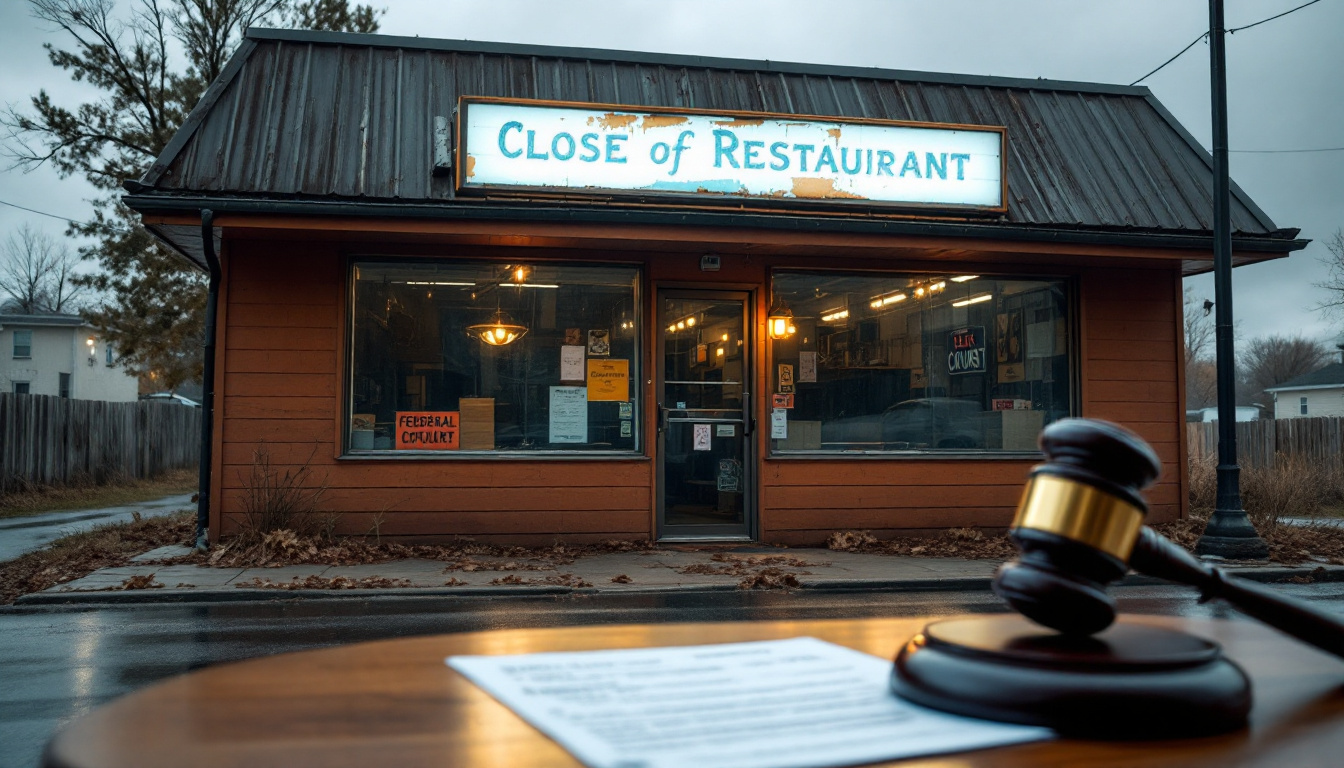
Salim Said's Safari Restaurant in Minneapolis told the government it was feeding 6,000 children a day.
According to reports, when federal agents watched the place, they counted about 40 people a day picking up food.
That's 150 times the actual number. The claims kept going in, and the checks kept coming out.
On October 28, U.S. District Judge Nancy Brasel sentenced Said to 30 years in federal prison. A jury convicted him in 2025 on all 21 counts, including wire fraud, bribery and money laundering. Prosecutors had asked for 40 years. His lawyer asked for 12.
Said ran his scheme through Feeding Our Future, a Minnesota nonprofit that handed out federal child-nutrition money to local meal sites during the pandemic. Prosecutors say Said and the network around Safari stole about $44 million, and that Said personally pocketed about $13 million. He filed thousands of fake meal claims himself and paid bribes to Feeding Our Future insiders, including founder Aimee Bock. One kickback was disguised as a $310,000 purchase of a Burnsville childcare center that didn't work.
The judge wasn't moved by hard-luck stories. Brasel pointed out that Said had a good job and was "not in a financial tough spot." She called what he did "a scalable business model." The more fake children he claimed to feed, the more he got paid.
His lawyer argued that Bock "signed every check" and that Said was just one player in a bigger machine. Twenty-one counts of wire fraud, bribery and money laundering describe someone who helped build the machine and made sure the right people got paid.
"I'm deeply sorry for the actions and my involvement in this very serious case," Said told the court.
Along with 30 years, he has to forfeit $7.8 million, a Mercedes-Benz, a pickup truck, real estate in Minneapolis and Plymouth, and a commercial building in Columbus, Ohio. He's a legal permanent resident, not a citizen, so he could be deported after he serves his time.
He's the 32nd person sentenced in the case, out of 81 charged since 2022. Amy Bock, the ringleader of the Minnesota feeding fraud, got nearly 42 years in May. Altogether, the network took hundreds of millions of dollars meant to feed kids.
This happened because Washington and St. Paul made it easy. During COVID, federal waivers loosened the program's rules and let for-profit restaurants like Safari get in on child-nutrition money. Money went out faster than anyone could track it. Anyone who asked questions got treated like they wanted kids to go hungry.
Minnesota officials did ask. In 2020, Gov. Tim Walz's Department of Education tried to stop Feeding Our Future's growth. Feeding Our Future sued and accused the department of discrimination. The department backed off and started approving its sites and paying its claims again.
The people who stole the money accused the people trying to stop them of racism, and it worked. Hundreds of millions of dollars later, the state is still sorting out the damage.
Now the bill is coming due, one sentencing at a time. Each new case gets reported as one more bad actor, but 81 defendants and a few hundred million dollars point to a system that was wide open.
Forty people walked into the Safari Restaurant, and taxpayers paid for 6,000 meals.
The judge called it a scalable business model. Now it's a 30-year sentence.