
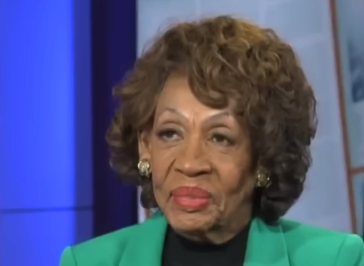
Rep. Maxine Waters went on camera this weekend to explain why Democrats are tearing each other apart ahead of the midterms. Her diagnosis? It's the white people in the press corps stirring things up for ratings.
Not the policy disagreements. Not the socialist wing pulling the party left while the old guard clings to corporate donors. The newsrooms. Specifically, the pale ones.
"Some of the media, mostly the white media, are interested in a fight in order to get their ratings up," the California Democrat said. She insisted Democrats were doing "pretty good" heading into the midterms before the cameras started focusing on all that pesky internal chaos.
This is a fascinating theory. It requires you to believe that the growing rift between the Democratic establishment and the Democratic Socialists of America — the one producing actual primary challenges, actual policy fights, and actual public screaming matches between elected officials — is a media fabrication. That the reporters covering it are the disease, not the thermometer.
It also requires you to believe that the relevant variable in biased journalism is skin color. Not ideology. Not corporate ownership. Not the revolving door between Democratic campaigns and network newsrooms. Skin color. From a woman who has spent forty years in Congress accusing roughly everyone of racism, this is less a new argument than aeli refresh.
Waters has represented her California district for decades, which means she's had a front-row seat to every iteration of this same internal fight. The progressives vs. the moderates. The squad vs. the caucus. The people who want to defund the police vs. the people who quietly wish they'd stop saying that out loud. None of these fractures were invented by Anderson Cooper.
But blaming media for the party's problems serves a specific function. It redirects. If the story is about journalists manufacturing conflict, then nobody has to answer the harder question — which is whether the Democratic coalition is actually holding together or just pretending to while the midterms approach.
The answer, based on every available data point, is the latter. Progressive candidates are running against establishment-backed Democrats in primaries across the country. The Democratic Socialists of America aren't shy about it. They want different policies, different priorities, and in many cases, different people in the seats. That's not a media narrative. That's a faction fight with real candidates and real ballots.
Waters calling it a ratings play is the political equivalent of a couple screaming at each other in a restaurant and then blaming the waiter for noticing.
What makes the "white media" framing especially clumsy is that it collapses under the lightest scrutiny. The outlets most aggressively covering the Democratic civil war include Black journalists, Latino journalists, and every other demographic category Waters might consider non-white. The divide isn't racial. It's ideological. Reporters from every background can see a party splitting in half because that's what's actually happening in front of the cameras.
But specificity was never the point. The point was to make the accusation broad enough that it can't be disproven and sharp enough that it discourages follow-up questions. Call the coverage racist, and maybe the coverage stops. It's a strategy that worked for a long time. It's working less now — partly because it's been overused, and partly because the facts on the ground are too obvious to wave away with a single adjective.
Waters also didn't name a single outlet, a single journalist, or a single specific story that she considered fabricated or exaggerated. That's the tell. If a specific report got it wrong, you correct the record and name names. If you can't point to anything specific, you're not objecting to inaccuracy. You're objecting to coverage.
Democrats heading into the midterms with this level of internal fracture have two options. They can address the disagreements — hash them out, find a message, pick a direction. Or they can deflect and blame the people reporting on the disagreements and hope voters don't notice.
Waters chose the second option. She added a racial modifier for extra insulation.
The midterms will tell us whether voters bought it. The early returns suggest they're watching the fight, not the finger-pointing about who filmed it.