
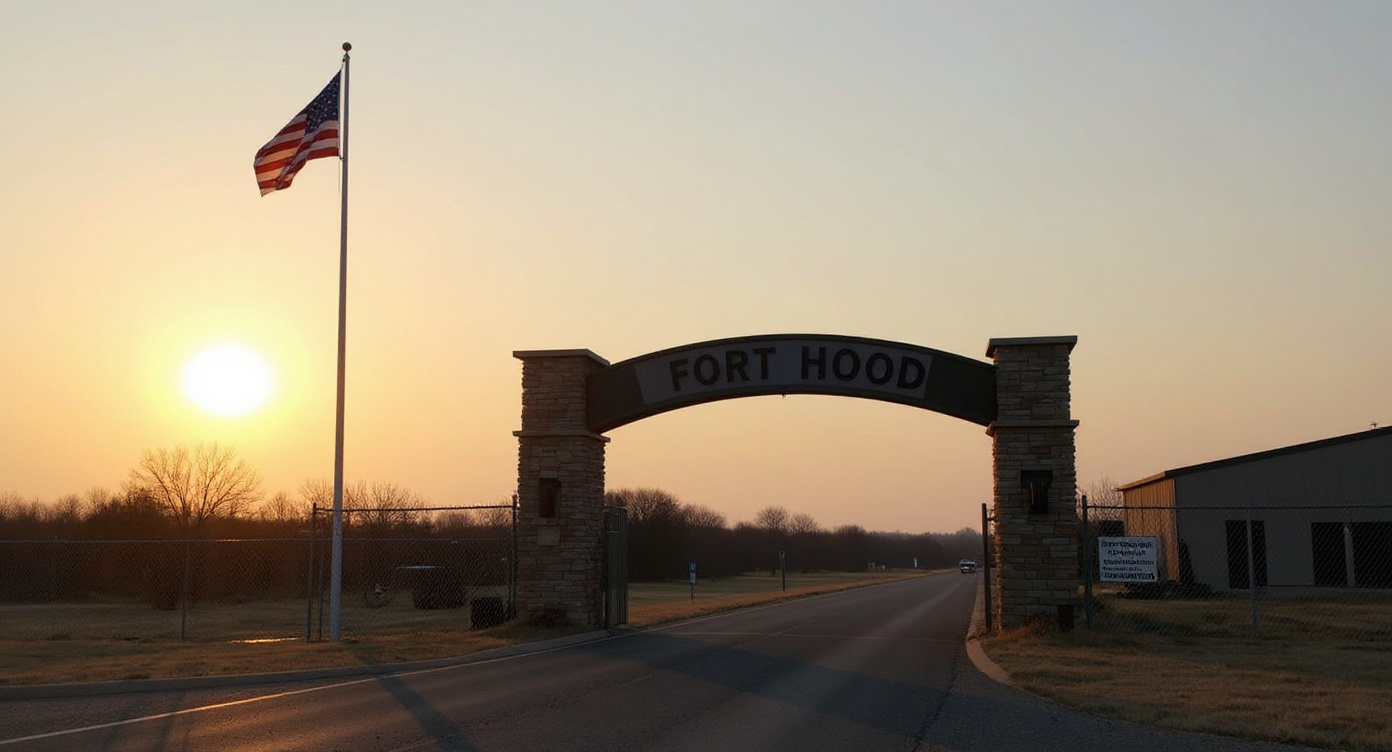
On November 5, 2009, Army Major Nidal Malik Hasan walked into the Soldier Readiness Processing Center at Fort Hood, Texas, and opened fire on unarmed service members preparing for deployment. Thirteen people died. Thirty-two were wounded. Hasan was convicted at court-martial in 2013 on 13 counts of premeditated murder and 32 counts of attempted premeditated murder.
That was thirteen years ago. He's been sitting on death row ever since.
President Trump and Secretary of Defense Pete Hegseth have now approved death by U.S. Army firing squad for Hasan — the first military execution to be carried out in over sixty years. Chief Pentagon spokesman Sean Parnell announced the decision: "Judgement day for Hasan has finally come."
The last time the U.S. military executed a service member was 1961, when Army Private John Bennett was hanged after he raped and attempted to murder an 11 year old Austrian girl. Since then, the machinery has technically existed but never moved. Ronald Gray, a former Army specialist, had his execution approved by President George W. Bush in 2008. It was never carried out. Four prisoners currently sit on military death row. Hasan is about to be the first one to have his sentence carried out.
The timeline tells the whole story. Hasan murdered thirteen soldiers in broad daylight in front of hundreds of witnesses. He admitted it. He represented himself at trial specifically to avoid mounting a defense. The conviction was never in question. The Supreme Court declined review in 2025. Seventeen years passed between the massacre and this approval — not because the facts were complicated, but because no president in the last seventeen years had the gumption to sign their name to a death warrant.
Remember what the official classification was. The Obama administration categorized the Fort Hood massacre as "workplace violence." Not terrorism. Despite Hasan screaming "Allahu Akbar" as he pulled the trigger over and over again. Workplace violence — the same category as a disagreement at a warehouse loading dock. That classification denied Purple Hearts to the wounded and survivor benefits to the families for years.
The families of the thirteen dead and thirty-two wounded spent years fighting just to have the attack called what it was. Trump's approval of the firing squad doesn't just end Hasan's appeals. It closes the loop on a bureaucratic cowardice that started the day someone in Washington decided that a military psychiatrist screaming "Allahu Akbar" while executing American soldiers was having a bad day at the office.
The gap between the crime and the consequence — seventeen years — isn't unique to Hasan. It's how the military justice system handles capital cases: appeals, reviews, delays, more reviews, a Supreme Court pass, and then the file sits on a desk waiting for someone willing to sign it. Two presidents had the opportunity. One signed.