
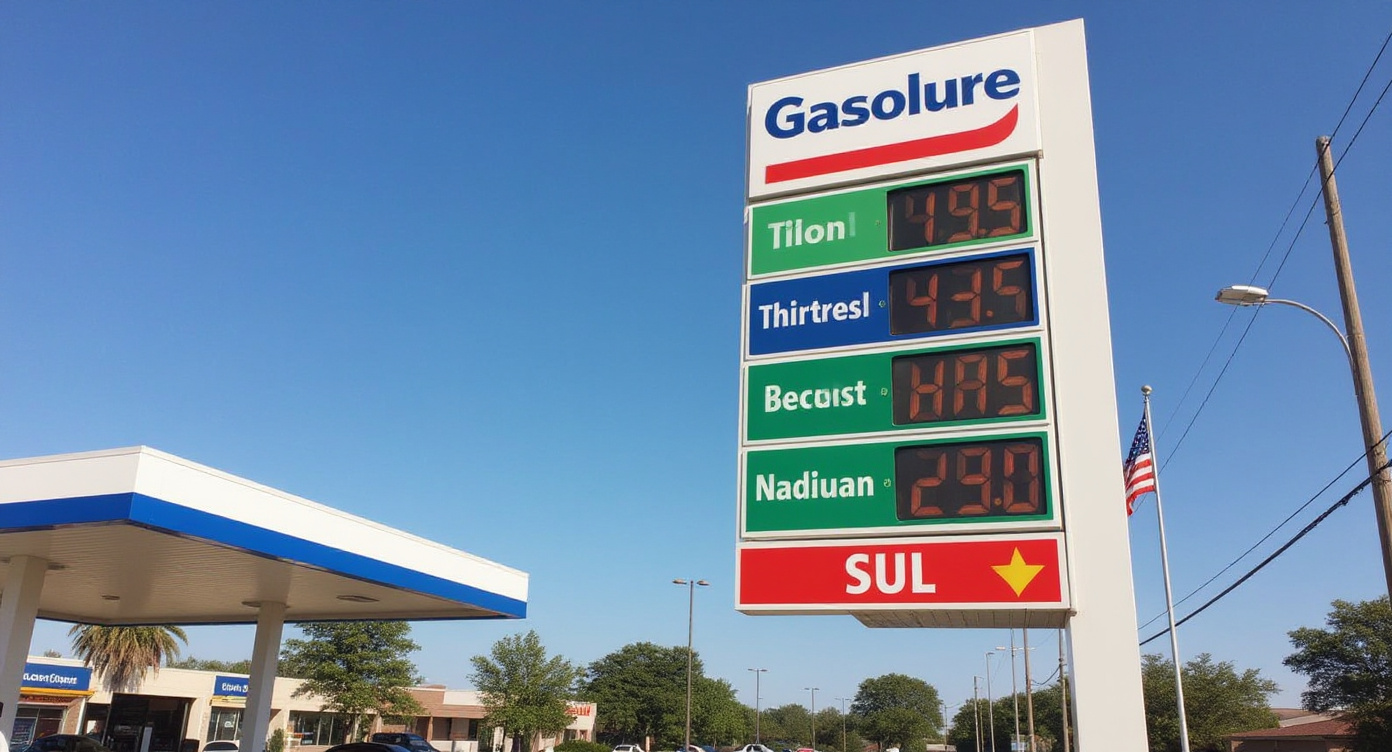
Inflation fell -0.4% month over month in June — the single largest monthly drop in six years. Gasoline and fuel prices declined nearly 9%. The economists who spent the spring predicting a tariff-driven price apocalypse are currently very busy not talking about it.
Year-over-year inflation came in at 3.5%, lower than the "experts" had forecast.
The Bureau of Labor Statistics numbers landed Monday morning, and they tell a story that doesn't fit the 'doomers' narrative we've been hearing since President Trump took office. We were told that President Trump's trade policies would send prices into orbit. We were told American consumers would be crushed under the weight of retaliatory economics. We were told, in very serious tones by very serious people, that the post-tariff era would look like a slow-motion grocery store hostage crisis.
Instead, real average hourly earnings are up 0.1% year-over-year. Real weekly earnings are up 0.3% year-over-year. Not staggering numbers on their own — but the direction matters. Wages are rising while prices are falling. That's the combination that was supposed to be impossible under Trump's economic framework, according to every cable news economist with a whiteboard.
As Eric Daugherty noted, "US inflation just STUNNED the experts and FELL -0.4% month over month, the largest plummet in 6 YEARS." The word "stunned" is doing a lot of work there. The only people stunned are the ones who spent six months building economic models based on the assumption that Trump doesn't know what he's doing.
The gas numbers deserve their own paragraph. Nearly 9% decline in fuel costs — during the same month we conducted military operations against Iran. M.A. Rothman put it bluntly: "Gas down nearly 10% the same month we bombed Iran. The '$7 a gallon war' the experts promised never showed up." That prediction was everywhere in June. Every legacy outlet ran some version of the "brace for pain at the pump" headline. The pump disagreed.
The economic data keeps arriving and it keeps failing to match the catastrophe that was promised by the doomers. This isn't one good month in a sea of bad ones. This is a trend that the political press has decided to cover the way you'd cover a solar eclipse: stare at it briefly, then look away before it damages your priors.
The administration's critics will point out that 3.5% year-over-year is still above the Federal Reserve's 2% target, and that's fair. Nobody's printing "Mission Accomplished" banners. But the trajectory matters more than the snapshot, and the trajectory just made a sharp move in the direction that the White House said it would and the commentariat said it couldn't.
There's a reason the inflation conversation has gotten quieter over the past few weeks. It's not because the media lost interest in grocery prices — they were obsessed with grocery prices for four solid years. It's because the grocery prices started moving in a direction that doesn't support the editorial line. When prices go up under a Republican president, it's a crisis. When prices come down under a Republican president, it's a "complicated picture" that requires "more data" and "context."
The data is the context. A -0.4% monthly drop doesn't need a panel discussion. It needs a correction — from every outlet that told Americans to expect the opposite.
But corrections require admitting the model was wrong. And the model wasn't just wrong about inflation. It was wrong about gas prices during a military conflict, wrong about wage erosion, wrong about the timeline, wrong about the magnitude. At some point, a forecast that misses on every variable isn't a forecast. It's a wish.