
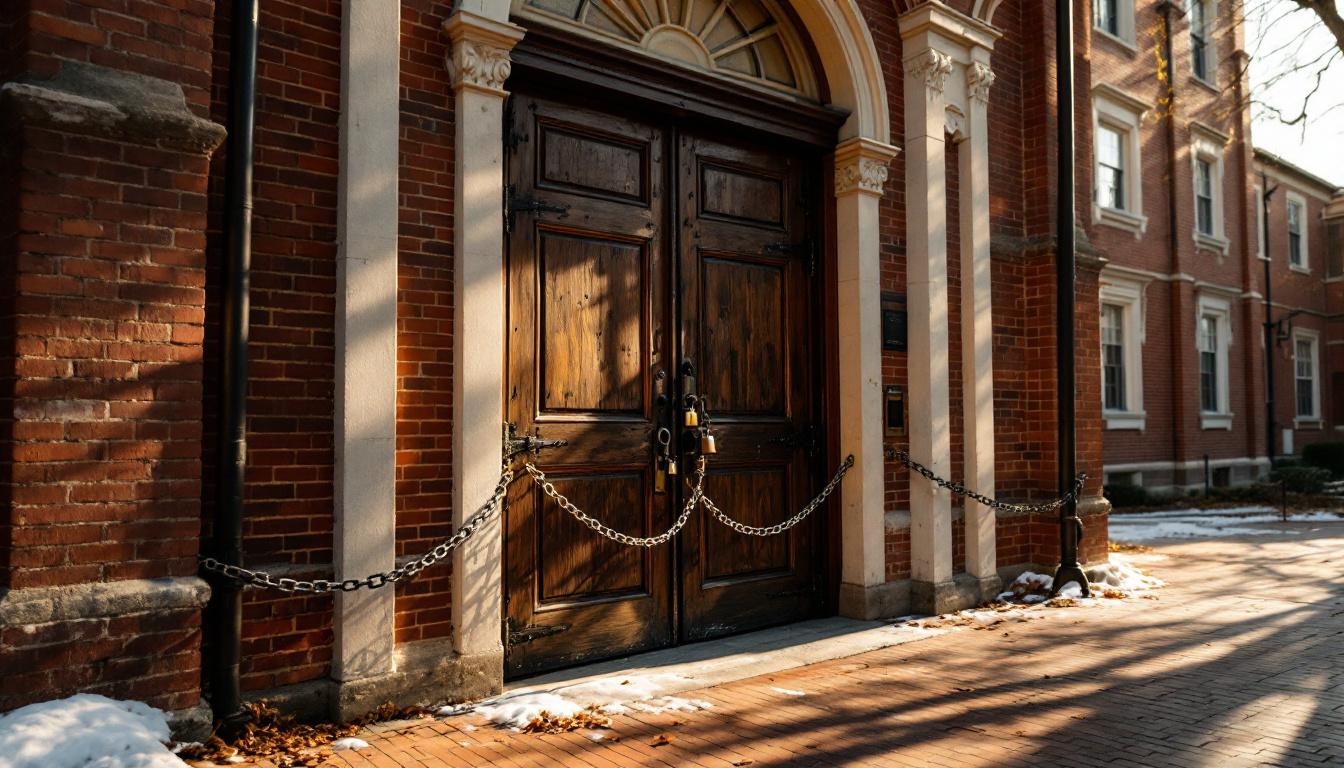
Harvard University — the institution literally founded in 1636 to train Christian clergy — is now banning religious worship from a new building so it can secure $675 million in tax-exempt public bonds through the Massachusetts Development Finance Agency. The richest university on the planet just told God to take a hike so it could squeeze a few more tax-free dollars out of the government trough.
Let that sink in for a second. A school sitting on one of the largest endowments in human history needs a government handout so badly that it will literally prohibit prayer inside its own walls. Priorities.
According to The College Fix, the new building is set to open in December 2027, and as a condition of securing the public bond financing, Harvard has agreed that "religious worship" will not take place inside it. The restriction comes from the tax-exempt bond structure — but legal scholars are already pointing out that it runs headfirst into a 2022 Supreme Court decision.
Ilya Shapiro, Director of Constitutional Studies at the Manhattan Institute, didn't mince words. "There are quite obvious legal issues here, particularly because it involves a state regulation that disfavors religion," Shapiro told The College Fix. He added that his reaction was simple: "Shocked is an understatement."
And he's right to be shocked. The Supreme Court ruled in Carson v. Makin back in 2022 that the government cannot exclude institutions from public programs simply because they engage in religious activity. Notre Dame Law School professor Nicole Garnett called the arrangement what it is — it's "got to be unconstitutional."
Michael Helfand, Chair at Pepperdine School of Law, echoed the same constitutional concern. "A state cannot exclude an institution from participating in such a government program because it would like to use the funds," Helfand said. The law is pretty clear here. The Massachusetts Development Finance Agency apparently missed the memo.
But here's the part that really tells you everything about what Harvard has become. Economics professor Edward Glaeser, who is actually at Harvard, said the quiet part out loud about the building's purpose: "We want Economics to be the largest concentration at Harvard for the next 200 years." Not theology. Not ministry. Not the thing the university was founded to do. Economics.
Garnett raised another delicious irony: "Maybe Harvard would reply that its Divinity School isn't sectarian." Right. Harvard has a Divinity School, and its new building bans worship. You can't parody these people — they parody themselves.
Shapiro also floated the logical endpoint of Harvard's position: "It's an interesting thought experiment, but university buildings that can't have any gatherings have no purpose." Because if you ban worship, what's next? Ban study groups that open with prayer? Ban a student who bows their head before an exam?
This is a university with roughly $50 billion in endowment assets. They could fund this building with the interest they earn before lunch on a Tuesday. Instead, they went to the government bond market — and agreed to ban the one thing the school was created to promote.
Mammon won. God got evicted. And Harvard's founding ministers are spinning in their graves so fast you could power that new building with them.