
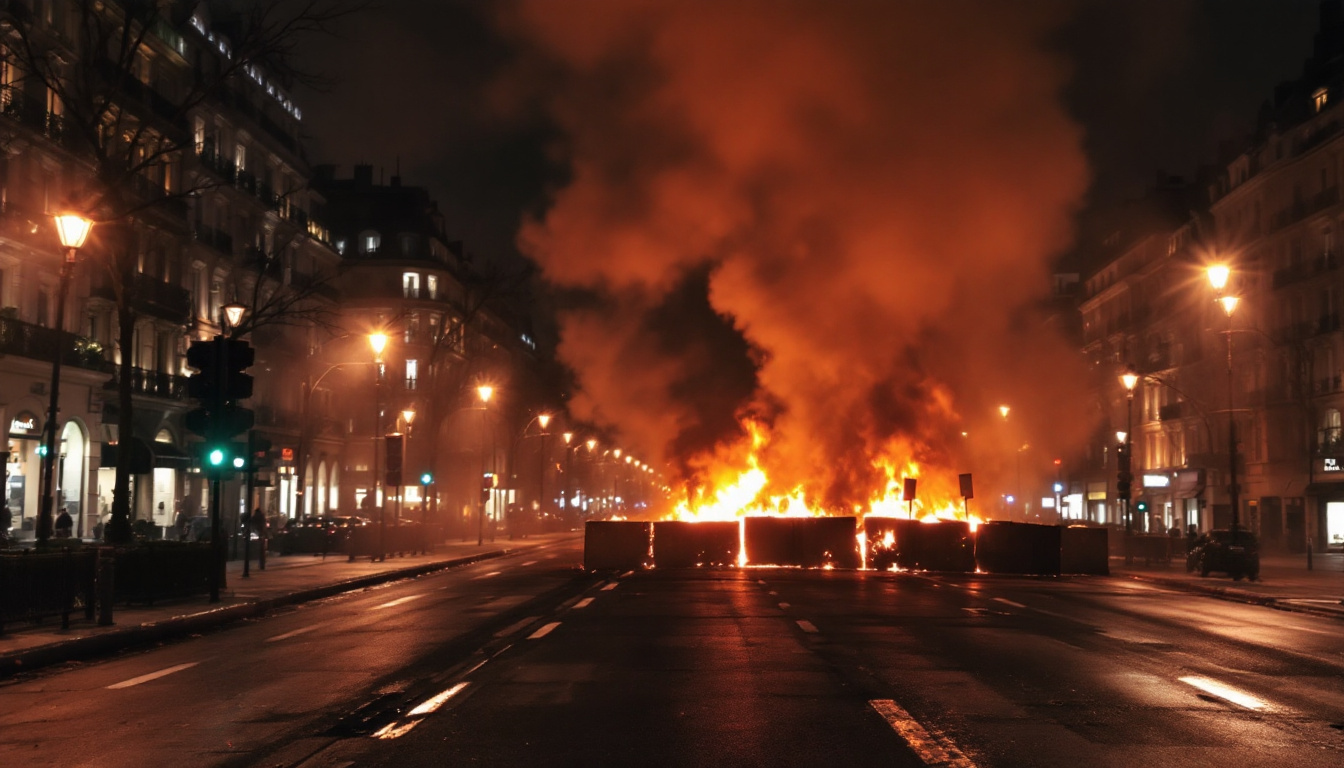
The far left gave the French government the excuse it's been wanting.
On October 22, Prime Minister Sébastien Lecornu sent a letter to France's four biggest telecom companies, Orange, SFR, Free, and Bouygues Telecom. He told them to be ready to cut off access to TikTok, Instagram, and Snapchat nationwide for several hours at a time if the riots came back. X was added to the list after the letter went out.
"I wish to have the ability to temporarily suspend access to these services in case of a repeat of urban violence," Lecornu wrote.
The government said rioters had been using the apps to organize looting, share information about targets, and track police movements in real time. That's probably true. It's also exactly what Emmanuel Macron has been angling for since 2023, when riots broke out over a police shooting outside Paris. "When things get out of hand, we may need to be in a position to regulate them or cut them off," he said then.
Three years later, his government has a letter sitting on the desks of every major phone company in the country.
The mob earned its share of the blame. The week before, France saw more than 2,500 arrests, close to 1,000 police officers injured, and more than 3,000 stores looted.
So last Saturday, the country braced for round two. About 70,000 police officers were deployed across the major cities, backed by soldiers, armored vehicles, drones, and helicopters.
It wasn't enough to keep the peace. By the Interior Ministry's count, at least 400,000 people turned out nationwide, including about 110,000 in Paris. Police detained almost 1,000 people by the end of the day, and the count later passed 1,300.
In Grenoble, authorities reported about 400 masked men in black bloc gear attacking police with mortars and other projectiles. Riot police fired tear gas in Paris, Marseille, Lyon, Bordeaux, Toulouse, Nantes, and other cities.
Interior Minister Laurent Nuñez didn't blame students. He blamed "individuals from the far-left and radical far-left."
The organizer lists back him up. Investigative journalist Asra Nomani tracked 287 groups behind 649 planned protest actions. Fifty of them describe themselves as Antifa, and only 27 are student or youth organizations. In a tighter count of the 54 groups at the core of the October protests, just 16 were student groups. The other 38 were communist groups, labor unions, political parties, and revolutionary left-wing outfits.
Nomani says the network ties back to Neville Roy Singham, an American-born tech tycoon. He has been widely reported as a major funder of far-left and pro-China activist groups around the world.
"The uprising in France is a communist revolution," said anti-communist analyst Karlyn Borysenko. "They are explicitly calling for the communist overthrow of the government and now it is bleeding into other countries."
It is. The riots have spread to Brussels, Barcelona, Naples, Rome, and Milan, and to Albania's capital, Tirana. In Rome, a mob waving Palestinian flags stormed the Colosseum. In Barcelona, police arrested 128 people, more than half of them minors.
The BBC described the French riots as "mostly peaceful."
That's not how the press covered the Canadian truckers in 2022. They parked their rigs in Ottawa and honked their horns, and Justin Trudeau invoked emergency powers and froze protesters' bank accounts. The press treated them as a threat to democracy. A mob looting 3,000 stores and hurting 1,000 cops gets "mostly peaceful."
French bond markets are pricing in the chaos, too. The gap between French and German borrowing costs is near the highs of the eurozone debt crisis.
The phone companies pushed back. They told the government they couldn't build the shutdown quickly, and that rioters would get around it with VPNs and other messaging apps. It wasn't used on Saturday.
The telecom companies say they aren't ready to build it. The prime minister's letter is still on their desks.