
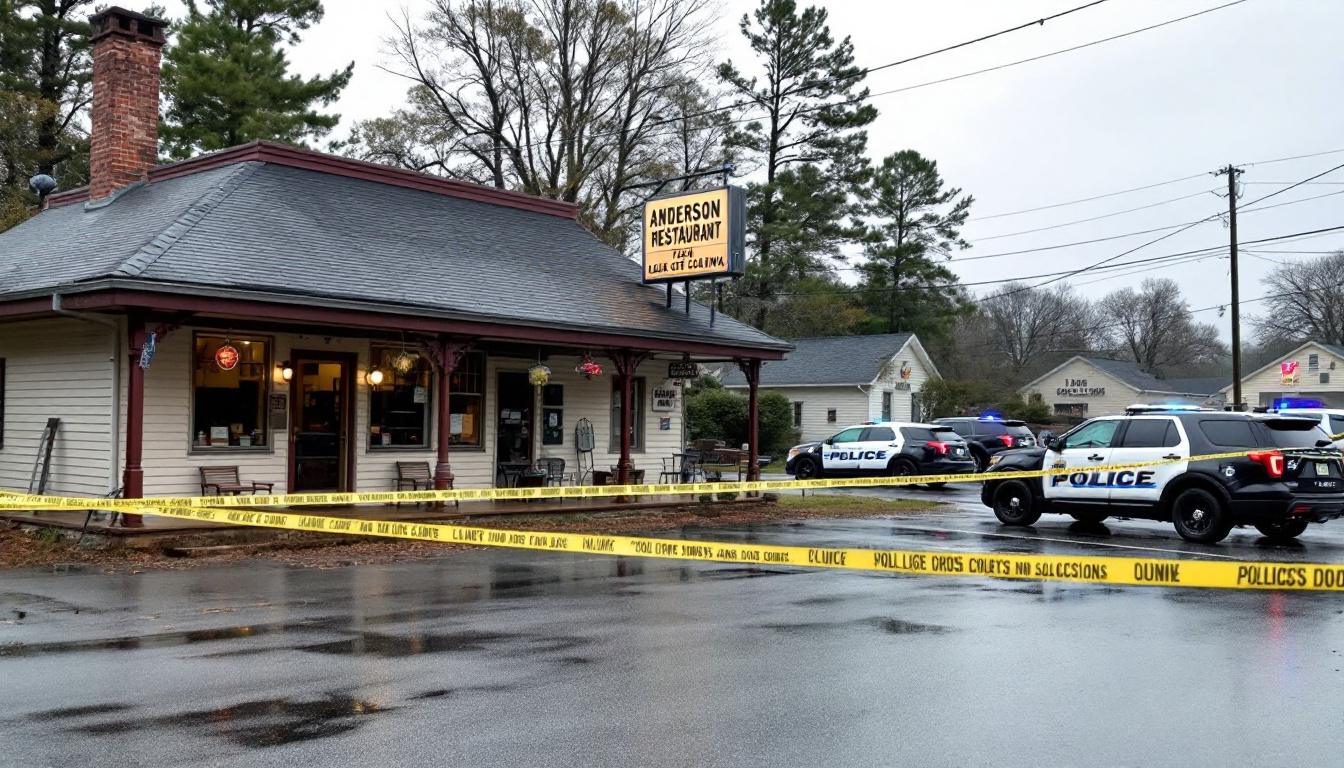
The workers at the Imperial Grill in Anderson County, South Carolina, didn't appear on the payroll. Approximately a dozen people, working 10 to 12 hours a day, six days a week, with their movements tightly controlled by the people who brought them there. The Department of Homeland Security confirmed on November 26, 2026, that four of the seven people arrested for running the operation were illegal immigrants from China.
Four out of seven.
The South Carolina Law Enforcement Division and the Anderson County Sheriff's Office arrested seven suspects on charges including human trafficking conspiracy, recruitment for forced labor, transportation for forced labor, and harboring trafficking victims. The co-owners of the Imperial Grill, Yun Fei Ni and Hui Jiang, were among those charged. The remaining suspects — Xiao Shan Zheng, Xuehua Jiang, Yun Mei Zhang, Ren Guiying, and Bi Juan Ni, all Chinese nationals — round out the group. DHS confirmed four of them had no legal right to be in the United States.
Brietbart reported the arrests, which paint a picture that has become disturbingly familiar. Workers recruited under false pretenses, kept off official records, forced into grueling schedules with no recourse. The trafficking ring operated out of a restaurant — the kind of small business that blends into any main street in America. The workers couldn't leave. Their names weren't on any payroll. They existed, as far as the official record was concerned, nowhere.
The "they're just coming for a better life" talking point assumes that illegal border crossings produce landscapers and dishwashers who want to play by the rules but can't get a visa. It does not account for the people who cross specifically to exploit other people who crossed. Four of the seven suspects arrested in Anderson County weren't victims of a broken system. They were running one.
This isn't an isolated case. In August, Texas authorities conducted Operation Red Card in Tarrant County, arresting 56 people — 10 of whom were accused of attempted child exploitation. The pattern repeats across state lines because the conditions that enable it don't change: a porous border, inadequate interior enforcement, and a political class that treats every immigration enforcement action as a humanitarian crisis rather than a law enforcement necessity.
The charges in Anderson County are specific and severe. Conspiracy. Recruitment. Transportation. Harboring. These aren't paperwork violations or overstayed visas. These are the building blocks of a forced labor operation that kept a dozen people working six-day weeks with no legal identity and no way out.
The open-borders crowd frames every immigration debate as a choice between compassion and cruelty. Anderson County reframes it as a choice between enforcement and exploitation. A dozen workers in a South Carolina restaurant didn't get a better life. They got 10-hour days, no payroll, and handlers who weren't supposed to be here either.
Four of seven. The ratio speaks for itself.