
The Stop Insider Trading Act needed 60 votes to advance in the Senate. It got 53. Every single one of the seven votes that killed it came from a Democrat.
All of them. Not one defection. Not one Democrat willing to say that members of Congress shouldn't be playing the stock market with information the rest of us don't have.
The bill had already cleared the House in July on a 232-198 vote. Speaker Mike Johnson called it "a very logical thing to do." Senate Majority Leader John Thune described it as "two common sense measures — a stock purchase ban for members of Congress, and a voter ID measure." The package would have barred lawmakers from purchasing individual stocks and required 7 to 14 days' notice before selling existing holdings, with penalties of $2,000 or 10% of the transaction value — whichever was higher.
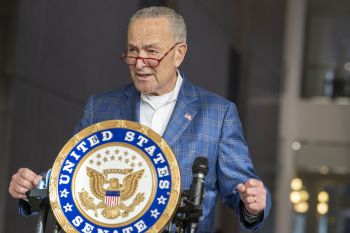
Senate Minority Leader Chuck Schumer led the opposition, calling the bill "a permission slip for corruption, not a stock trading ban." He went further: "Only Senate Republicans would dare call a bill that permits members of Congress to continue to own, sell and buy stocks, a stock trading ban."
Schumer's argument hinges on the fact that the bill didn't force members to liquidate existing holdings. It banned new purchases and penalized sales without proper notice. That's not a permission slip for corruption. That's a framework that didn't exist yesterday. Schumer voted against the framework because it wasn't perfect — which is a convenient standard when you'd prefer no framework at all.
The real tell is what Democrats focused on instead. Chris Josephs, co-founder of Autopilot — the company behind the Nancy Pelosi Stock Tracker — pointed to the voter ID provision bundled into the package, calling it a "kill pill." Democrats didn't reject the stock trading ban because they had a better stock trading ban. They rejected it because Republicans attached a requirement that voters prove they're citizens. The party that wants to ban "misinformation" couldn't stomach verifying identity at the ballot box.
Sen. Pete Ricketts pushed the package from the Senate side, and Rep. Bryan Steil sponsored it in the House. The bill had bipartisan public support. Polling on congressional stock trading bans has consistently shown supermajority approval across party lines. The disconnect between what Democratic voters want and what Democratic senators just did is not subtle.
This wasn't a procedural technicality or a buried amendment on a 3,000-page omnibus. This was a standalone vote on whether the people writing securities regulations should be allowed to trade securities. Fifty-three senators said no. Forty-seven said yes, actually, we'd like to keep doing that.
The 53-47 vote fell seven short of the 60 needed to advance. Seven votes. All from the party that spent a decade demanding Wall Street accountability.
Schumer called it a permission slip for corruption. The vote was 53-47. His side was the 47.