
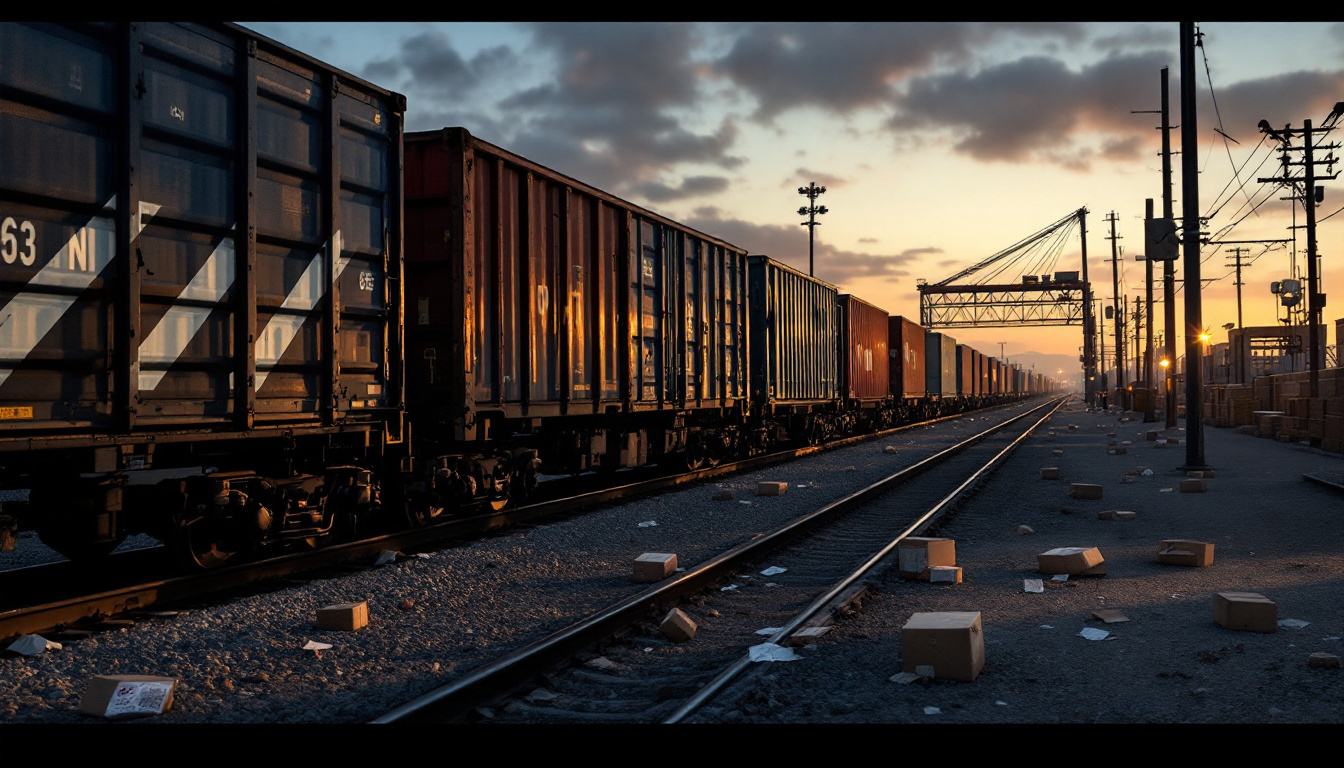
Nathan Daniel Angel, 21, of East Los Angeles, allegedly helped burglarize at least 36 freight trains coming out of the ports of Los Angeles and Long Beach. The operation netted $22.5 million in stolen cargo — Nike sneakers, Milwaukee power tools, Crocs, electronics — moved through stash houses and resold via fence networks and social media.
The suspects filmed themselves doing it. Shared photos and videos in group chats breaking into rail cars, posing with stolen merchandise and stacks of cash. They captioned their AI-generated crew images "Los Trenes."
Acting U.S. District Attorney Bill Essayli announced the federal indictment on November 19, charging Angel and thirteen co-defendants with cargo theft conspiracy. Each faces five to twenty years if convicted. The bust is part of a broader federal push targeting organized theft networks hammering freight and rail infrastructure across Southern California.
The method was about as sophisticated as you'd expect from guys who post their own crime spree online. According to prosecutors, the defendants cut air hoses on freight trains to force them to stop, boarded the rail cars, hauled the goods to stash houses, and flipped them through fence networks and social media marketplaces. Over a million dollars in Nike sneakers alone walked out of those rail cars.
Thirty-six trains. Not one. Not a handful. Thirty-six separate freight trains burglarized in a region that handles roughly 40 percent of all containerized cargo entering the United States. The Los Angeles and Long Beach port complex is the single largest trade gateway in the Western Hemisphere, and a crew of twenty-somethings was treating it like a self-service warehouse.
The group chat evidence is what elevates this from a crime story to a time capsule. These weren't criminal masterminds running a tight operation. They were kids with bolt cutters and iPhones, bragging about felonies in real time, building a brand — "Los Trenes" — complete with AI-generated artwork. The feds didn't need an informant. They needed a Wi-Fi connection.
For years, cargo theft along rail corridors in Southern California was treated as a cost-of-doing-business nuisance. Containers got hit, insurance absorbed the losses, trains kept rolling. What changed is the DOJ actually prioritizing it as organized crime instead of filing it under petty theft and moving on. Essayli's office treated this like what it was: a $22.5 million criminal enterprise operating in plain sight.
The port region has struggled with rail theft surges since at least 2022, when images of looted packages littering the Union Pacific tracks in Lincoln Heights went viral. Local prosecutors largely declined to pursue aggressive charges. The thieves noticed.
Fourteen defendants. Thirty-six trains. Twenty-two and a half million dollars. And a group chat full of selfies with the evidence.
As reported by Hot Air, the charges were unsealed November 19. The defendants face up to twenty years in federal prison — which, unlike the revolving door in Los Angeles County, tends to mean actual time served.