
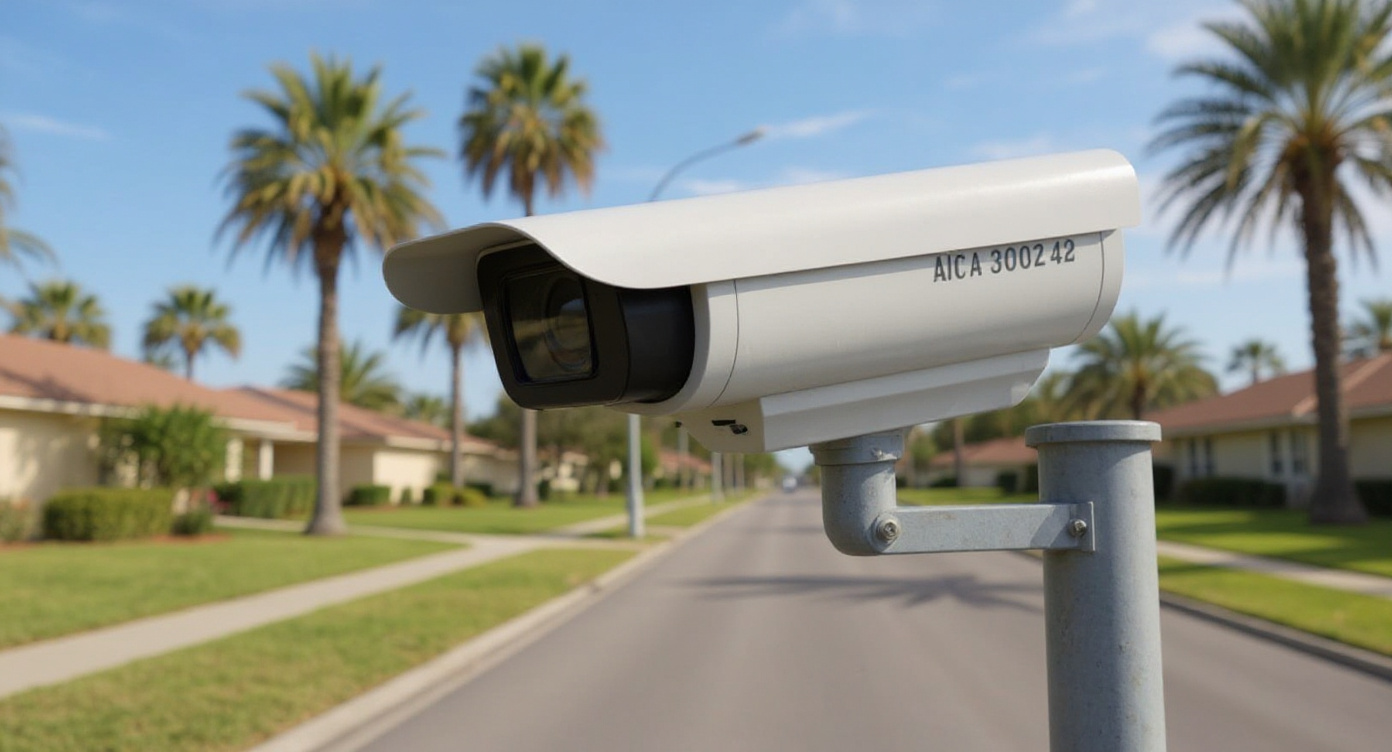
There are approximately 7,500 automated license plate readers quietly mounted on roads across Florida right now. They record where you drive, when you drive there, and how often. Nobody voted for them. No ballot measure. No public hearing in most cases. Local agencies just started bolting them to poles.
Governor Ron DeSantis just announced he's ripping them down.
"Our agencies that had a few of them are bringing them down," DeSantis said on Eric Bolling's "Main Street America." "We're going to clear the state right-of-ways."
The Florida Fish and Wildlife Conservation Commission and the Florida Highway Patrol have already begun removing cameras from state-controlled roadways. DeSantis estimated that 98% of the license plate readers in Florida are operated at the local level — cities, counties, and police departments that installed them without state oversight.
"I think these cameras, the license plate readers, I think it's out of control," DeSantis said.
The cameras in question are primarily manufactured by Flock Safety, a company that has quietly become one of the largest surveillance vendors in the country. The devices photograph every passing license plate and feed the data into searchable databases. Law enforcement can track a vehicle's movements across an entire region without a warrant, without probable cause, and without the driver ever knowing.
"And, no one's been stronger on law enforcement than me, but I don't want to have this become a surveillance state," DeSantis said — and that's the line that matters. This isn't coming from a soft-on-crime governor worried about hurting criminals' feelings. This is coming from the guy who deployed the National Guard to the border, suspended a Soros-backed prosecutor, and signed the toughest anti-riot legislation in the country.
DeSantis acknowledged that the cameras have been used for some legitimate law enforcement purposes. "They will say that they've used them on apprehensions of some illegal aliens. And so, I don't doubt that. And if that's being done very targeted, then we can have a conversation," he said. But a "conversation" about targeted use is a very different thing than 7,500 cameras recording every car on the road.
Tallahassee Police Chief Lawrence Revell seemed to read the room. "First of all, I want to say to our community, we hear you. We hear the concern," Revell said — which is the kind of statement a department issues when it knows the political winds have shifted.
DeSantis pointed to New Hampshire as a model. The Granite State banned automated license plate readers on public roads entirely, with provisions requiring rapid data purging for any that remain in limited use. Florida may follow a similar framework.
The usual defense of mass surveillance is that if you're not doing anything wrong, you have nothing to worry about. Which is exactly what every government in history has said right before it started using its surveillance infrastructure against political opponents, religious minorities, or anyone who became inconvenient. The Fourth Amendment doesn't have a carve-out for technology that didn't exist in 1791.
Twenty years ago, a proposal to photograph and log every car on public roads would have been laughed out of a city council meeting. Now it takes a governor to undo what local bureaucracies did without asking.