
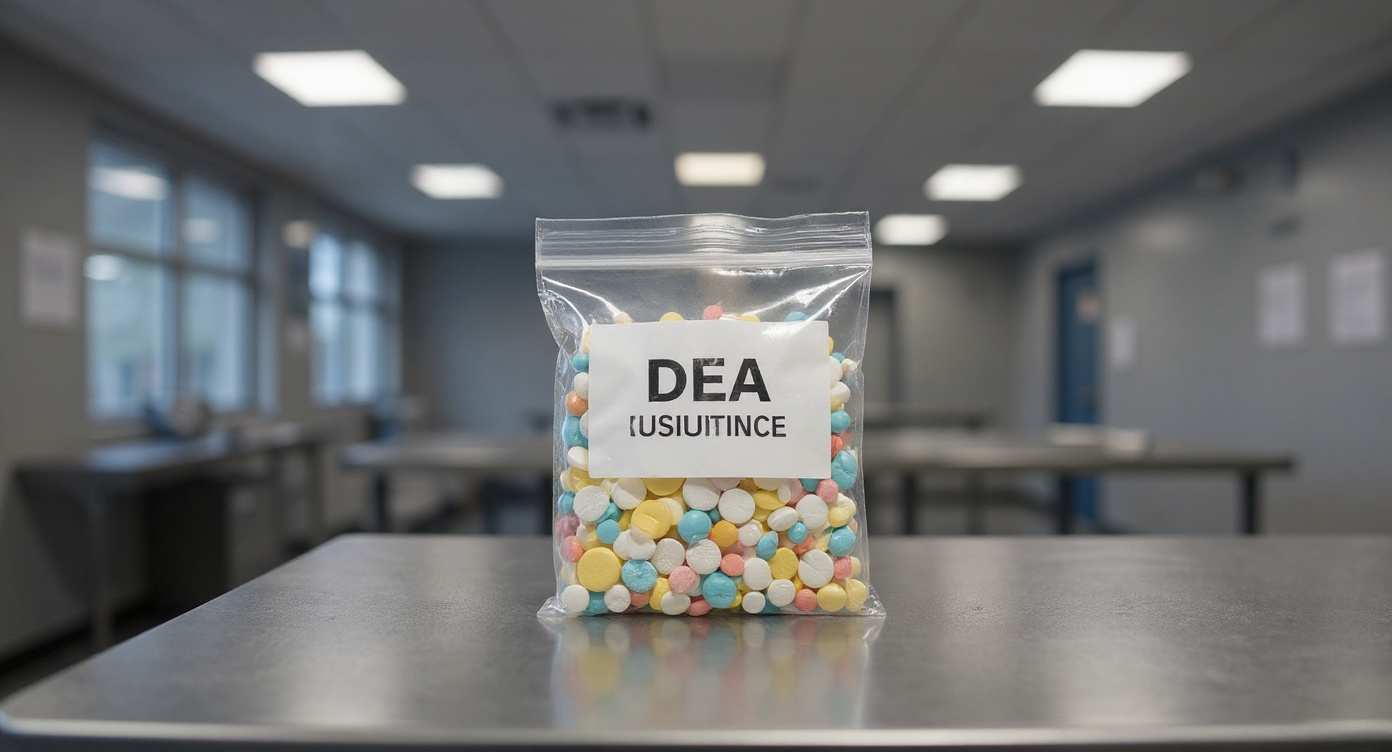
DEA Special Agent David Howell spent 14 years intercepting drugs before they reached American neighborhoods. Then his own agency told him to stop.
Howell's crime wasn't letting drugs through. It was refusing to.
Howell filed a whistleblower complaint in late 2023 alleging the Biden-era DEA knowingly allowed more than 1 million fentanyl pills to flow onto American streets — including specific shipments of 150,000 and 50,000 pills that agents were ordered not to seize. The operation was run through the U.S. Attorney's Office in New Mexico, a state that recorded higher fentanyl overdose rates than any other state during the two-year span in question.
"We poisoned our community to make cases," Howell said. "Through our own willful blindness, we get to say, 'We don't really know what happened to the drugs.' But we 100% got people killed."
The logic, if you can call it that, was the same logic that produced Operation Fast and Furious between 2009 and 2011 — let dangerous contraband walk so agents can build bigger cases against bigger targets. Fast and Furious let semiautomatic weapons cross the border into cartel hands. This time, the contraband was fentanyl. The targets were American lungs and bloodstreams.
Tristan Leavitt, president of Empower Oversight and Howell's attorney, put the agency's own messaging against it. "DEA has a campaign that says one pill can kill, and so the DEA allowing this to happen was really significant," Leavitt told reporters. He added that "Howell's view was, if you have fentanyl in front of you, you need to interdict it. That's how we save lives."
Apparently saving lives wasn't the priority. A similar fentanyl protocol had been adopted by the Justice Department in 2019, meaning the framework for letting pills walk was already institutional by the time Howell raised the alarm. When he did — filing his complaint in late 2023 — Leavitt says his client was silenced.
The details track almost beat-for-beat with Fast and Furious: a federal agency allows deadly contraband to circulate domestically under the theory that tracking it will eventually produce bigger arrests. The contraband kills people. The agent who objects gets punished. The officials who approved it face no consequences.
The DEA's own public awareness campaign — "One Pill Can Kill" — warns Americans that a single counterfeit pill laced with fentanyl can be fatal. The agency ran that campaign while simultaneously allowing over a million of those pills to reach the streets of New Mexico and beyond.
President Trump signed an executive order in December 2025 designating fentanyl as a weapon of mass destruction. That designation exists because of the scale of death fentanyl has caused in American communities. More than a million pills reaching the streets isn't a policy disagreement. It's a body count with a chain of custody that leads back to the people who were supposed to prevent it.
One pill can kill. The DEA let a million through.