
Gernot Döllner, CEO of Audi, stood at a podium in Perry, Georgia on Saturday and committed $4.2 billion to build his company's first manufacturing plant in the United States. A full production facility in Macon, Georgia, turning out 200,000 premium SUVs a year and employing 4,500 people.
This is exact type of company that was supposed to be fleeing according to Democrats.
Remember the tariff panic? Every major European automaker was going to pull back from the American market. CNN ran the graphics. The economists did the math. Deutsche Welle ran worried segments about German industry "rethinking" its exposure to the U.S. And now here's Audi — a German automaker owned by the Volkswagen Group — writing a check with a B in it to build cars in Georgia.
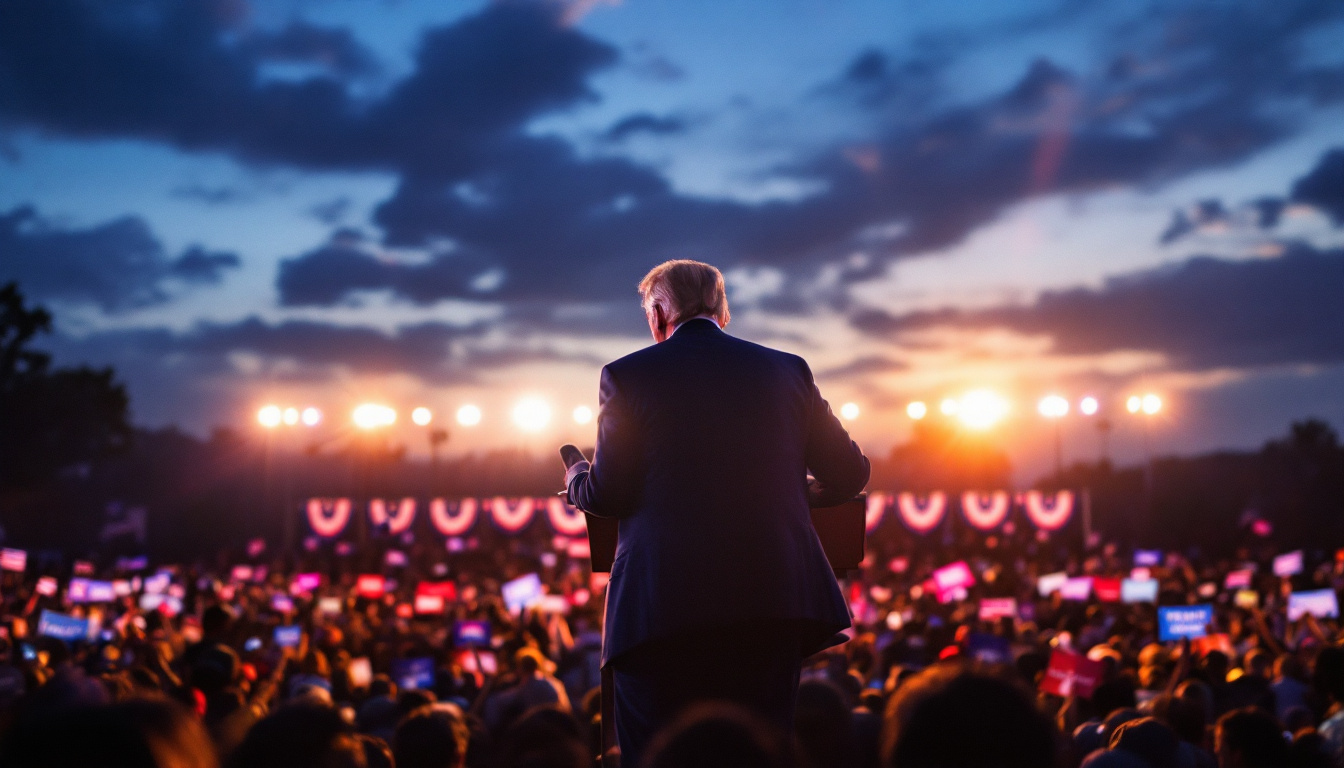
President Trump told the crowd during a rally, "Today I'm thrilled to announce a massive auto manufacturing investment in the great state of Georgia by a fantastic company." He added that Audi "has just committed to invest $4.2 billion in nearby Macon, Georgia to begin construction next month." Trump called it "the single largest investment in U.S. auto industry history, modern history."
Döllner wasn't hedging, either. "It's a fantastic opportunity for Audi, for the Audi team and for America," the CEO said. Then he laid out exactly what's coming: "We are planning to bring our biggest and most premium SUVs and produce them here in Macon, Georgia. This is a long-term investment because we believe in the American market."
Long-term investment. Believe in the American market. That's not the language of a company being dragged here against its will by tariff pressure. That's a company that looked at the math — labor costs, energy prices, consumer demand, regulatory environment — and decided America under this administration is where the money is.
The Macon facility is expected to produce Audi's premium SUV lineup for the North American market. Audi plans to begin grading the Middle Georgia Megasite in 2027, start construction in 2028, and reach full production by 2031. Governor Brian Kemp confirmed the investment would create roughly 4,500 jobs at the site.
Trump framed the Audi deal as part of a broader wave, touting $40 billion in total auto industry investments expected to generate 30,000 American jobs. The pattern here isn't subtle. Foreign manufacturers aren't just tolerating the tariff structure — they're responding to it by moving production onto American soil. Which is precisely what the policy was designed to do.
The critics who said tariffs would shrink foreign investment had a clean theory. Raise the cost of importing, companies pull out, consumers suffer. Neat on a whiteboard. But Audi didn't read the whiteboard. Neither did the $40 billion in broader commitments Trump cited.
Döllner said it plainly: long-term investment. Not a hedge. Not a workaround. A $4.2 billion bet on Georgia, placed while the tariffs the experts said would drive Audi away are still in effect.