
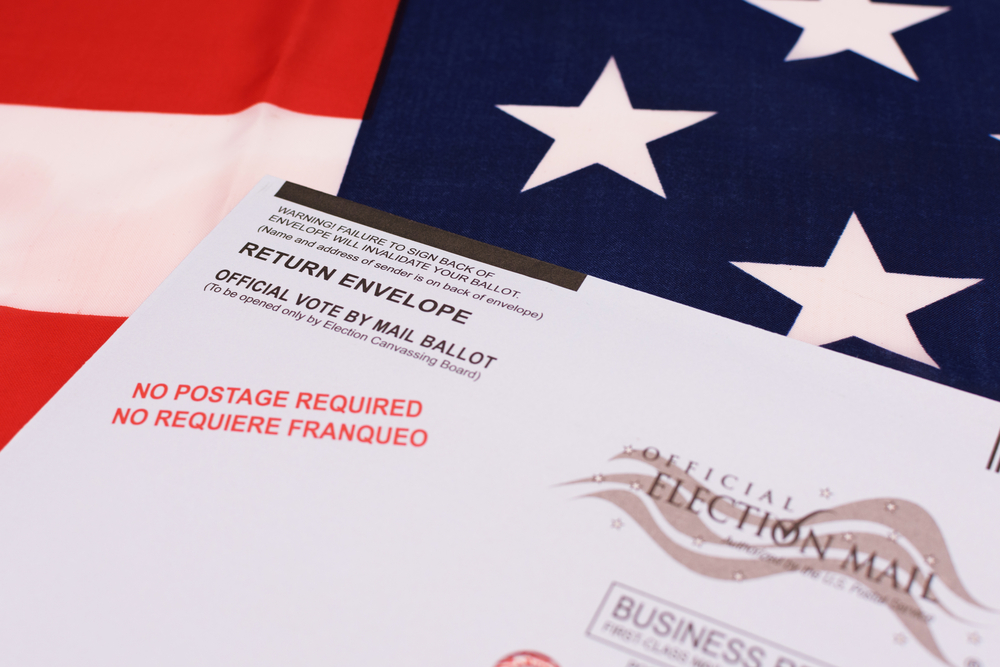
A unanimous three-judge appellate panel just reversed a lower court ruling that had blocked the U.S. Postal Service from implementing voter registration compliance requirements for mail-in ballots. The rule, directed by an executive order President Trump signed in March, would require USPS to cross-check voter registration data before processing mail-in ballot requests. If a state doesn't comply that state's ballots don't get mailed.
The NAACP and allied groups fought it. They lost. Unanimously.
The lower court had initially blocked the proposed USPS rule after the NAACP argued it would suppress voter access. The appeals panel disagreed on every count, clearing the way for Postmaster General David Steiner to move forward with implementation. Steiner framed the policy in the simplest possible terms: ensuring "the right ballots are going to the right people."
That's the part that apparently terrifies the left. Making sure ballots go to actual registered voters. The horror.
Bill Essayli, First Assistant U.S. Attorney for the Central District of California, didn't mince words about what the ruling means. "This ruling is a win for election integrity and would have significant implications for states like California that refuse to submit their voter rolls to verify compliance with federal election laws," Essayli said.
California refusing to verify voter rolls. File that under things that are definitely not suspicious.
The ruling has implications well beyond one state. A separate injunction had previously blocked similar compliance efforts in nearly two dozen states. This appellate decision signals that the legal framework the left built to keep mail-in ballot verification toothless is cracking. The Trump administration's March executive order directed the Postal Service to create voter registration data requirements — essentially telling USPS to stop being a blind pipeline and start confirming that the person requesting a ballot actually exists on the rolls.
The NAACP's argument boiled down to the claim that verifying voter registration before mailing ballots would disenfranchise voters. Think about that for a second. Confirming that someone is registered to vote before sending them a ballot is, in their framing, voter suppression. By that logic, checking IDs at a bar suppresses drinking.
The original lower court judge bought it. Three appellate judges did not.
This fight didn't start in a vacuum. A 2021 settlement had required USPS to prioritize election mail monitoring through the 2028 election cycle — an arrangement that predated the current push for registration verification. The Trump team's executive order layered actual compliance teeth onto a system that was previously just monitoring whether envelopes arrived on time. The shift from "did it get there" to "should it have been sent" is the whole ballgame.
The ruling gives the Trump team a significant boost heading into the next election cycle. States that have resisted submitting voter rolls for federal verification now face a legal landscape that's considerably less friendly to stonewalling. And with the midterm elections just three and a half months away there is not a lot of time left to appeal the decision.
The opposition had every advantage on the first round — a sympathetic lower court, a coalition of civil rights organizations, and a media environment that treats "election integrity" like a dog whistle. They still couldn't hold the line when three judges looked at the actual law.
Verifying that registered voters receive ballots used to be called "running an election." Now it takes a presidential executive order, a federal lawsuit, and a unanimous appellate ruling to make it happen.