
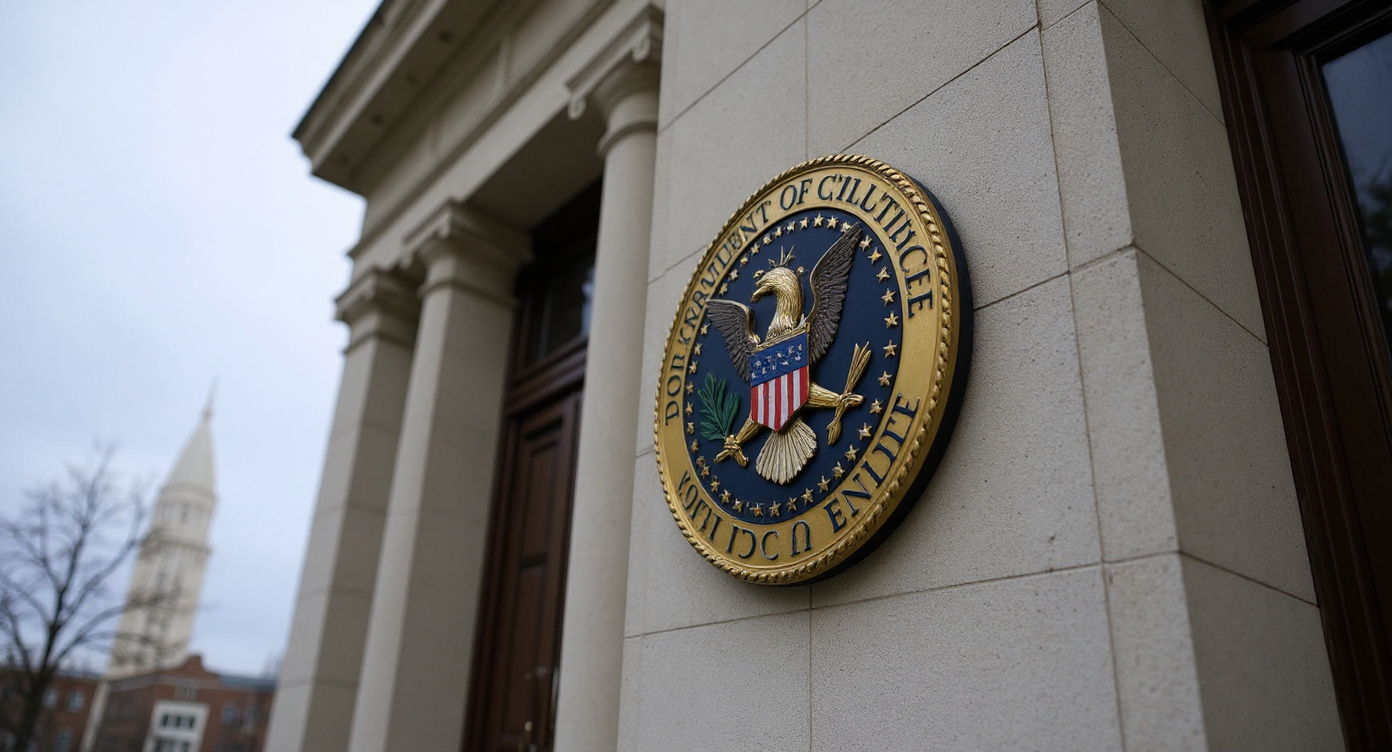
A tax preparer in Georgia ran a scheme that filed for $74 million in fraudulent refunds using more than 16,000 U.S. Treasury checks. In Texas, a separate ring used sham trusts to conceal $1.5 billion in income, generating an estimated $200 million in tax losses. Both operations ran for years. Both got rolled up on the same day.
October 14, 2026 — the day the Department of Justice announced it had done something it had never done before.
The National Tax Enforcement Surge, as the DOJ called it, coordinated 35 U.S. attorneys' offices alongside the Justice Department's National Fraud Enforcement Division and IRS Criminal Investigation in a six-week blitz that produced 76 defendants and more than $490 million in estimated intended tax losses. Twenty-three new charging actions hit 31 defendants for schemes totaling over $350 million. Another 45 defendants faced trials, guilty pleas, and sentencings tied to nearly $140 million in additional losses. All of it announced simultaneously.
Attorney General Todd Blanche framed the scale without softening it: "Every dollar stolen through tax fraud is a dollar taken from the American people. What we uncovered during this concentrated surge is only the tip of the iceberg."
Four hundred and ninety million dollars in fraud — across identity theft rings, crooked tax preparers, and trust manipulation schemes — and the AG is calling it a warm-up.
IRS Criminal Investigation Chief Jarod Koopman described what made this operation different from the agency's standard enforcement actions: "The consolidated actions we are announcing today represent an entirely new approach in our enforcement strategy. Partnering with DOJ to strategically surge resources around a broad range of tax crimes." The key word is "surge" — not a standing task force, not a pilot program, but a concentrated nationwide hit designed to take down multiple fraud networks before they could warn each other.
The National Fraud Enforcement Division that quarterbacked the operation didn't exist seven months ago. It was established in April 2026 — built from scratch under the Trump DOJ specifically to run coordinated, multi-district fraud prosecutions. The Biden-era DOJ had four years to create something like it. It chose to allocate those resources differently.
The contrast writes itself, but the numbers sharpen it. Under the previous administration, the DOJ's most visible coordinated operation was the special counsel investigation of Donald Trump — a multiyear effort that produced zero convictions of the target and cost taxpayers millions in legal fees. The Trump DOJ just announced $490 million in fraud exposure in The geographic spread — 35 separate U.S. attorneys' offices acting in concert — is what makes this unprecedented. Tax fraud prosecutions typically happen district by district, case by case, with no coordination across jurisdictions. Fraudsters exploit that gap, running schemes in multiple states knowing the left hand of federal enforcement rarely talks to the right. The surge model closed that gap in six weeks.
The Georgia scheme alone — 16,000 Treasury checks, $74 million — would have been a headline-worthy prosecution in any administration. Here it's one line item in a 76-defendant sweep. The Texas trust fraud — $1.5 billion concealed, $200 million in estimated losses — would normally anchor an entire press conference. It shared the stage with two dozen other cases.
Four hundred and ninety million dollars. Seventy-six defendants. Thirty-five offices. Six weeks. And according to the Attorney General, they're just getting started.