
The mullahs blinked first.
After weeks of chest-thumping, sanctions-dodging, and enrichment-spinning, Iran’s regime — the same crew that swore they’d never bow to American pressure — is now practically sprinting back to the negotiating table. Funny how a naval blockade and a few well-placed military strikes can clarify a nation’s priorities.
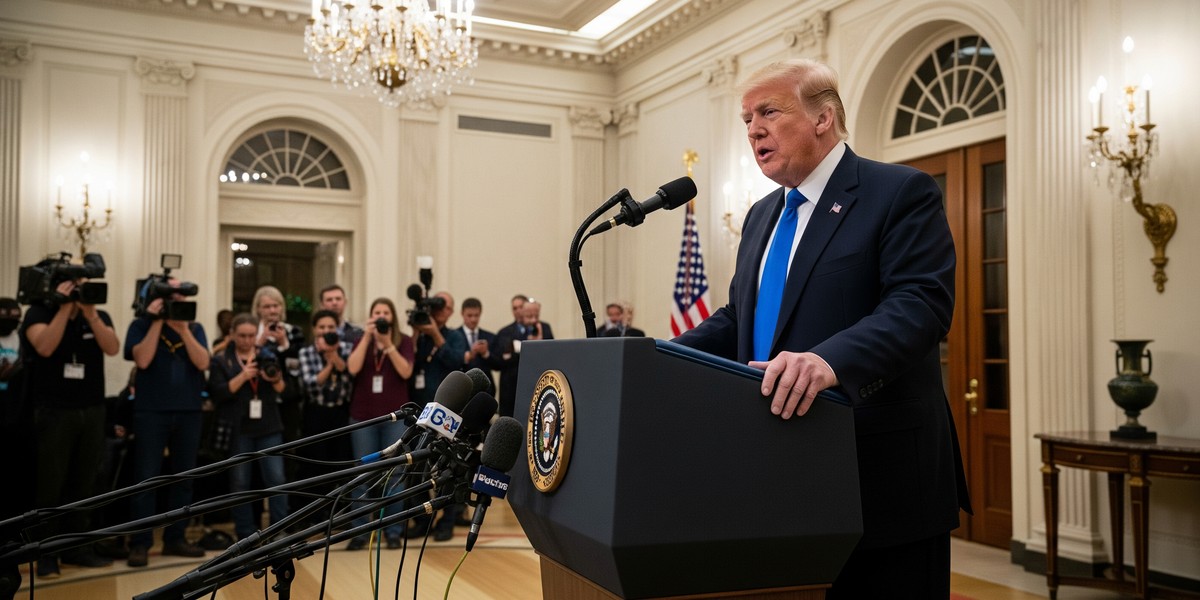
President Trump, in a pre-recorded interview with Maria Bartiromo on Fox Business, laid it out with his usual bluntness:
“I had to divert because if I didn’t do that, right now you would have Iran with a nuclear weapon. And if they had a nuclear weapon, you would be calling everybody over there — and you don’t want to do that.”
Translation: while the foreign policy establishment was busy writing op-eds and wringing its hands, Trump actually did something. He didn’t send a sternly worded letter. He didn’t convene a panel. He sent the Navy.
From Collapse to Crawling Back
Let’s rewind. Over the weekend, roughly 21 hours of Pakistan-mediated negotiations in Islamabad fell apart like a wet paper bag. Tehran’s delegation — and this is the part that tells you everything — refused to meet Washington’s core demand: abandon your nuclear ambitions, hand over your enriched material, and we’ll talk about the rest.
Iran said no. So Trump said fine. And on Monday, the United States slapped a full naval blockade on Iranian ports. Ships trying to get in? Turned around. Shipping patterns? Already shifting. The economic vise tightened so fast you could almost hear the ayatollahs’ wallets screaming.
And here’s where it gets good. Within 48 hours of the blockade going live, Trump told the New York Post that discussions “could be happening over the next two days,” adding the U.S. was “more inclined” to return to Islamabad. He credited Pakistan’s Field Marshal Asim Munir with helping facilitate the process. Even U.N. Secretary-General António Guterres said Tuesday it’s “highly probable” talks will restart.
When the U.N. agrees with Trump’s read of the room, you know the pressure is working.
Checkmate, Not Chess Club
Deputy White House Chief of Staff Stephen Miller didn’t mince words on Fox News, calling Trump’s strategy exactly what it is:
“President Trump has put Iran in a box. He’s played the checkmate move.”
Miller argued that whether Iran negotiates or digs in, “America wins.” That’s not spin — it’s math. Iran’s economy was already on life support before the blockade. Now it’s flatlined. The regime can posture all it wants, but you can’t fund proxy wars and nuclear programs with an empty treasury and a blockaded coastline.
Trump himself made the stakes crystal clear:
“If I pulled up stakes right now, it would take them 20 years to rebuild that country. And we’re not finished. We’ll see what happens. I think they want to make a deal very badly.”
Twenty years. Let that sink in. That’s not a negotiating tactic — that’s a reality check delivered with a sledgehammer.
The Grand Bargain — Or Else
Vice President JD Vance, who led the U.S. delegation in Islamabad, has been framing this as something bigger than the usual Washington half-measure. Speaking at a Turning Point USA event Tuesday, Vance explained that Trump “doesn’t want to make… a small deal. He wants to make the grand bargain.”
The offer on the table? Iran permanently ditches its nuclear program, stops bankrolling terrorism, and in return gets full economic normalization. Vance described a future where the U.S. would help Iran “thrive” economically and integrate into the global economy “in a way they haven’t been in my entire life.”
That’s not aggression. That’s a golden off-ramp for a regime that’s been driving toward a cliff for decades.
Vance acknowledged the trust deficit — “There’s a lot of mistrust… you’re not going to solve that overnight” — but added a telling observation: “I think the people we’re sitting across from wanted to make a deal.”
The holdup? Iran’s negotiators didn’t have the authority to seal the agreement. They had to go home and ask the boss. Classic authoritarian bureaucracy — the guys at the table can’t say yes without permission from the guys who sent them to the table.
No Half-Deals, No 20-Year Freezes
Trump squashed one rumor fast. Reports surfaced that negotiators had floated a long-term freeze on uranium enrichment — a 20-year pause that would’ve let Tehran save face while keeping the centrifuges dusted and ready.
“I’ve been saying they can’t have nuclear weapons. So I don’t like the 20 years.”
No ambiguity there. No loopholes. No sunset clauses that let the next administration’s State Department shrug and say “well, technically…” Trump wants the nuclear program gone — not paused, not frozen, not put on a shelf where someone can grab it later.
And if Tehran doesn’t agree? As Trump put it Monday: “There’s no deal.” The United States has been contacted by the “right people” in Iran who “would like to make a deal — very badly.” But wanting a deal and deserving one are two different things.
Iran’s got a choice: take the best offer they’ll ever get from an American president, or watch their economy and military infrastructure crumble while the blockade tightens. The clock is ticking, the ships are in position, and Trump isn’t bluffing. He never was.