
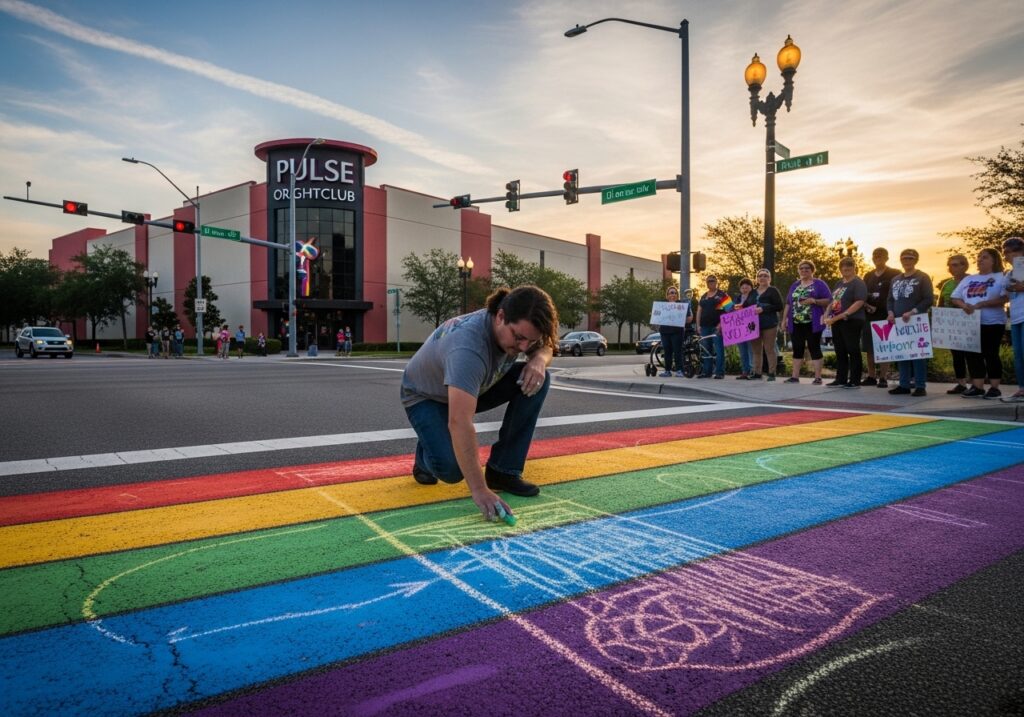
A video of rainbow stripes being chalked onto an Orlando intersection went viral this week, sparking headlines that locals were “defying” Governor Ron DeSantis. The colorful display popped up outside the former Pulse nightclub, where 49 people were tragically killed in 2016. Some activists say repainting the rainbow is about “refusing to be erased.” But here’s the truth: public roads are not the place for political art, no matter how well-intentioned.
The original rainbow crosswalk was painted in 2017, a year after the Pulse shooting. It was meant to honor the victims and show support for the LGBTQ+ community. But it was also installed during a time when state and federal governments were much more lenient about turning public infrastructure into political statements. That era is over.
In June, Transportation Secretary Sean Duffy issued a nationwide directive: political displays on public roads must go. Crosswalks, he reminded local governments, are for safety — not storytelling. “Taxpayers expect their dollars to fund safe streets, not rainbow crosswalks,” Duffy said. It’s a fair point. Federal road funding is meant to build and maintain clear, consistent traffic markings that keep people safe — not to promote any particular cause.
So, the Florida Department of Transportation followed the directive and removed the rainbow design. The crosswalk was repainted in standard white, in line with national safety guidelines. That should have been the end of the story.
But activists didn’t let it go. Over the weekend, a group gathered and began chalking the rainbow colors back onto the road in protest. Videos quickly spread online, with headlines declaring that locals were bravely “defying” DeSantis and “restoring” the memorial. But let’s be clear: what they actually did was vandalize a public thoroughfare.
This wasn’t a grassroots art project or a simple tribute. It was a political stunt — one that put personal expression above public rules and safety. No one is erasing the tragedy of Pulse, and no one is saying those lives didn’t matter. What’s happening is a long-overdue cleanup of public spaces that have become cluttered with symbolic gestures instead of functional design.
Even Orlando Mayor Buddy Dyer, a Democrat, admitted the crosswalk had been installed “in close coordination with the state” and “adhered to national safety standards.” But that was then. Standards have changed. The federal government, under President Trump and Secretary Duffy, is making it clear: political messaging — whether it’s rainbow stripes, BLM slogans, or partisan flags — has no place on public infrastructure.
Of course, critics are calling the move “cruel” and “political.” That’s ironic, considering it was political from the start. Painting a crosswalk in rainbow colors is not a neutral act. It’s a statement. And once you open the door to one kind of symbolic display, you invite them all — left, right, and everything in between.
Do we want crosswalks painted in MAGA red? Should intersections display pro-life or pro-gun messages? Probably not. That’s why a neutral standard matters. Public roads should be just that — public, neutral, and focused on safety.
The Pulse shooting was a horrific tragedy, and the victims deserve to be remembered. That’s why there’s an official memorial site underway — one that’s off the road and designed for reflection, not traffic. That’s the proper place for mourning and tribute. Not a busy intersection.
It’s time to stop turning public streets into protest signs. The rainbow crosswalk was always more about politics than safety. Now, the state is simply restoring order, fairness, and clarity to our roads. That’s not erasure. That’s responsible governance.