
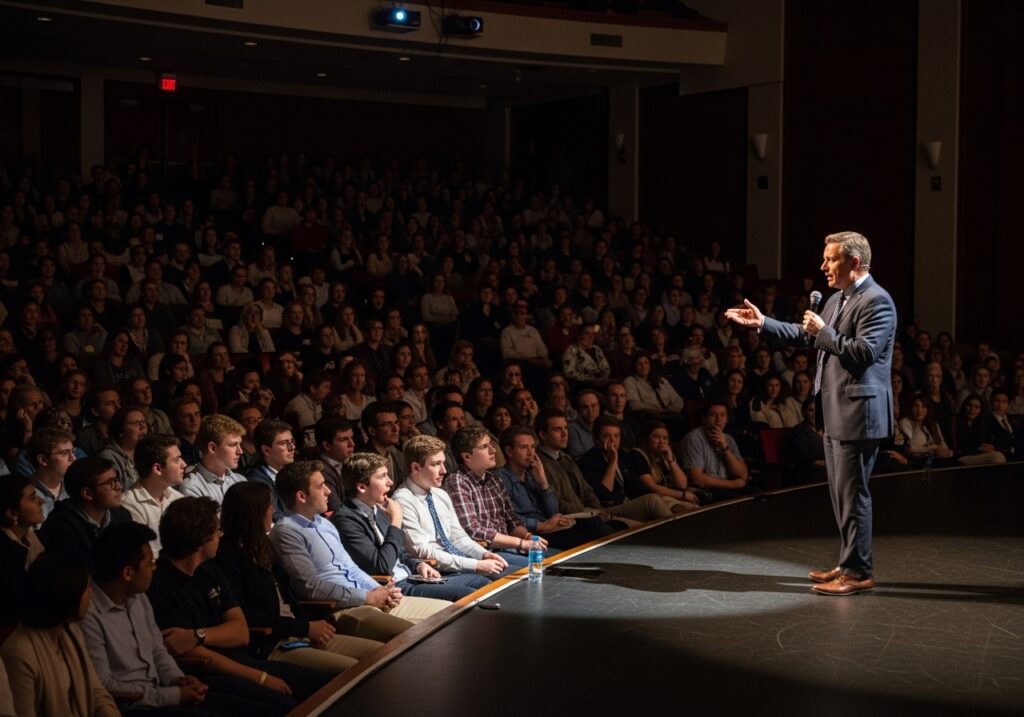
Every fall, new students arrive at Amherst College, one of the most prestigious schools in the country. But this year, the freshman orientation included something that’s now making headlines for all the wrong reasons. Videos from the event show students acting out sexual scenes on stage, moaning loudly, and pretending to have sex under blankets—all while handing out condoms to the audience like party favors.
The performance, called “Voices of the Class,” is part of Amherst’s long-standing orientation program. According to the school, the skits are meant to spark conversation about sexual health, relationships, and personal boundaries. But not everyone is buying it.
Some students say they felt uncomfortable, even disgusted, by what they were made to watch. Isabella Niemi, a junior at Amherst, told the Washington Free Beacon she was shocked by the graphic content. “I thought about leaving 10 minutes in,” she said. “I’m not someone who breaks rules or skips mandatory events, but it was disgusting enough it almost forced me to leave.”
The skits are reportedly based on real excerpts from students’ own admissions essays—though used out of context and rewritten in ways that some say feel deeply personal and inappropriate. While the school says the event is optional, multiple students claim they were told or strongly encouraged to attend.
Footage from the event, now circulating online, shows students simulating sex acts in front of their peers. Some scenes include loud moaning, suggestive dancing, and actors thrusting under blankets. In other parts, condoms are tossed into the crowd. Critics say the performance crossed a line and did more to embarrass than educate.
“I understand that Amherst is trying to remove the taboo behind sex on campus, but this has gone way too far,” said John Collier, another junior. “The way it’s forced in our faces does the exact opposite.”
Despite the backlash, Amherst College stands by the program. Amanda Vann, the school’s director of health and wellbeing, defended the skits, saying they’ve been a part of orientation for over 25 years. She claims the performances help students talk about uncomfortable topics like consent, communication, and self-care.
“They encourage conversations about topics that can sometimes feel difficult to discuss,” Vann said. “By presenting these subjects in a relatable, engaging format, the skits help students build the skills and awareness needed to care for themselves, support one another, and contribute to a healthy, respectful community.”
But here’s the key question: Does this approach actually work—or is it just another example of elite colleges pushing boundaries too far in the name of “progress”?
In theory, helping students talk openly about sex and relationships is a good thing. College is a time when young adults are learning how to navigate life on their own, and it’s important they understand topics like consent and safety. But there’s a big difference between education and performance art that some see as pornographic.
When students are made to watch explicit scenes—especially during their very first week on campus—it can create discomfort, confusion, and even fear. For students coming from more conservative or religious backgrounds, the experience might feel more like a shock tactic than a helpful lesson.
It’s also worth asking why a school that charges nearly $93,000 a year for tuition and fees is using student essays for performances that some feel humiliate or misrepresent them. Do students give their full consent for their writing to be used this way? And if not, why is the school allowed to do it?
This controversy touches a nerve in the ongoing debate about what colleges should be teaching—and how they should be teaching it. While Amherst insists their goal is to promote respect and understanding, many students are walking away feeling the opposite.
At the end of the day, helping young people prepare for adulthood doesn’t have to mean crossing every boundary. Sometimes, the best way to teach respect is to show it first.