
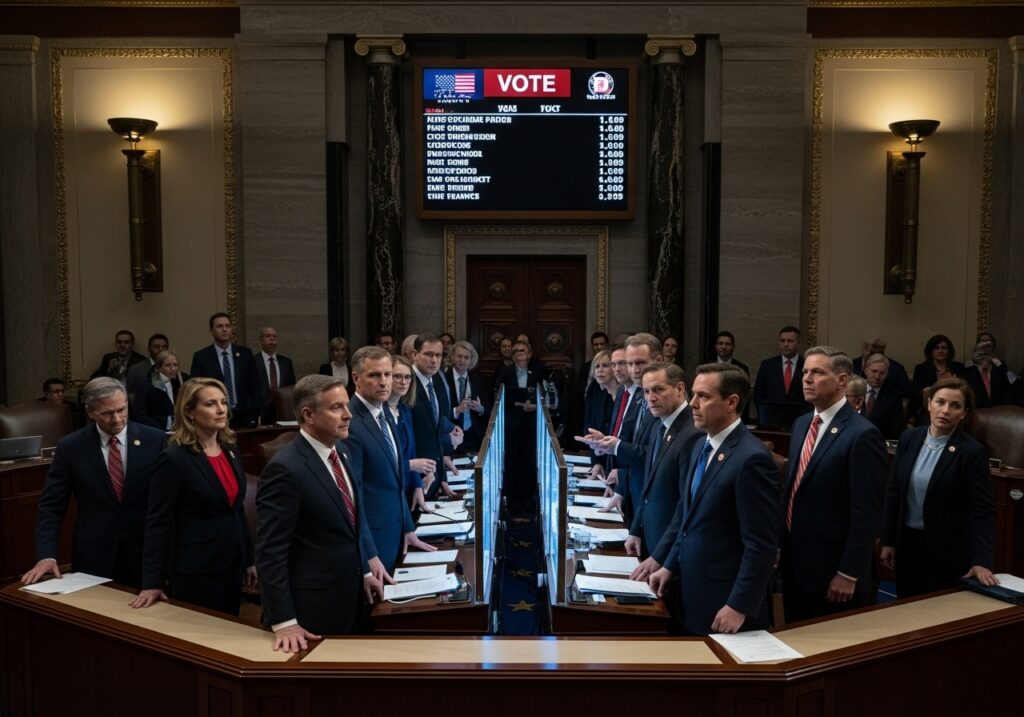
There’s a headline making the rounds: “13 Republicans Vote with Democrats to Defy Trump’s Executive Order.” Sounds bad, right? And for good reason. Let’s break it down and get to the truth of what happened, why it matters, and who’s really standing up for American workers—and who’s caving to the swamp.
Back in March, President Trump signed an executive order aimed at cleaning up bloated bureaucracy and restoring accountability in the federal workforce. The order restricted collective bargaining by federal employee unions—groups that often act more like political machines than representatives of hardworking Americans. The goal was simple: protect national security, increase efficiency, and make it easier to hold underperforming federal employees accountable.
Sounds like common sense, right? But not to the entrenched union bosses and their political allies in Congress.
Fast forward to this week. A bill introduced by Democrat Jared Golden from Maine—the so-called “Protect America’s Workforce Act”—passed its first major hurdle in the House. All Democrats backed it, along with 13 Republicans who should’ve known better. The bill is designed to reverse President Trump’s executive order by restoring collective bargaining rights to about 1 million federal workers.
Golden claims the order was “union-busting” and harmful to workers’ rights. He says it was never about national defense. But let’s look at the facts.
Federal employee unions are not your average labor unions. These are not coal miners or factory workers fighting for better hours. These unions represent bureaucrats—many of whom have job security for life, rich benefit plans, and almost no fear of being fired, no matter how poorly they perform. In some agencies, it takes over a year to discipline or remove an employee, even for serious misconduct.
President Trump’s order was about fixing that. It was about making the federal government work for the people again—not for the unions. It was about making sure that national defense agencies like the Department of Defense could run efficiently and respond quickly to threats, without union red tape slowing everything down.
So why would 13 Republicans side with the Democrats on this?
That’s the real question.
Some of the names on the list are no surprise. People like Brian Fitzpatrick or Don Bacon have a long history of bucking the conservative base. Others, like Nicole Malliotakis or Mike Lawler, come from deep-blue states and may be trying to play both sides. But let’s be clear: siding with the Democrats on a bill written by union-backed politicians is not “moderate”—it’s betrayal.
It’s a betrayal of the conservative principles that helped elect President Trump. It’s a betrayal of the effort to drain the swamp and hold the federal bureaucracy accountable. And it’s a betrayal of every taxpayer who’s sick and tired of funding a government that works more for itself than for the people.
The AFL-CIO, one of the most powerful union groups in the country, made it clear what this fight is really about. They called Trump’s executive order “political retribution” and promised to fight it in the streets, the courts, and the halls of Congress. That tells you everything you need to know. This isn’t about protecting workers—it’s about protecting union power and keeping their grip on Washington.
The bill still has more hurdles to clear. It needs to pass the Senate and get signed into law. And with President Trump back in the White House, that’s not likely to happen—unless more Republicans break ranks and join the opposition. That’s why it’s so important to call out these 13 Republicans and let them know their voters are watching.
In the end, this isn’t just a fight over one executive order. It’s a fight over who runs this country: the people, through their elected president—or the unelected, unaccountable bureaucracy backed by powerful unions and their political allies.
President Trump made a promise to take on the deep state and return power to the people. This executive order was one step in that fight. The 13 Republicans who voted against it need to answer a simple question: whose side are they on?
Because come election time, the American people will remember.